


Golf tees are best chosen by length, material, visibility, and whether you need stock or custom packs. Most golfers do well starting with standard or long tees for driver use, then adding shorter tees for par 3s. For events or gifts, personalized golf tees and bulk orders make the most sense once you know your preferred size and color.
A golf tee looks simple until you start buying with intent. Then the choices show up fast: wood or plastic, 2.75 inches or 3.25, bright colors or classic white, plain stock packs or custom printed options for events and gifts.
If you are shopping for golf tees now, you are probably not asking whether tees matter at all. Instead, you are asking which type fits your driver, your visual preference at address, your budget, and maybe your plans for personalization. This guide focuses on those real buying decisions.
It explains tee types, sizes, materials, and customization options so you can choose with less guesswork. If you are building out your setup beyond tees, our Best Golf Accessories for Men page is a helpful next stop. You can also explore this best golf accessories guide for more round-ready picks.
How tee choices change the buying decision
Golf tees are a small purchase, but they sit at the intersection of performance preference, visibility, style, and convenience. Most golfers can play perfectly well with a basic tee. However, many still develop a strong preference once they notice how height, material feel, and color affect their setup.
Size is usually the first filter. If you use a modern driver with a large head and prefer the ball teed high, a longer tee often makes setup easier. On the other hand, if you mainly want tees for irons, fairway woods, or par-3 play, shorter options can feel more controlled and less wasteful.
Material is the second filter. Wood golf tees remain popular because they are familiar, inexpensive, and easy to find. Plastic golf tees may last longer, though some golfers dislike the feel, shape, or look.
Then comes customization. A plain pack works for everyday rounds, while personalized golf tees or printed golf tees bulk orders make more sense for tournaments, wedding favors, member gifts, and corporate events. That is why the best golf tees are not one universal model. They are the tees that match your club setup, buying habits, and the role the product needs to play.
Types, sizes, and materials explained
Most golf tee purchases can be narrowed down with four questions: how high do you tee the ball, what clubs are you buying for, how visible do you want the tee to be, and do you want stock or customized packs?
Common golf tee sizes
- Short tees are often preferred for irons, hybrids, and many par-3 tee shots.
- Standard tees suit many drivers and fairway woods, especially for golfers who do not tee the ball unusually high.
- Long tees are useful for larger modern drivers and golfers who want more flexibility in tee height.
If you are unsure, standard-to-long sizes are usually the safer first buy for driver use. You can always tee lower with a longer tee. By contrast, a tee that is too short can limit setup options.
Wood golf tees vs. plastic golf tees
- Wood golf tees are traditional, simple, and widely accepted as the default choice for everyday play.
- Plastic golf tees may offer better durability, which can appeal if you dislike replacing broken tees often.
Neither material guarantees better shots. Instead, the better choice usually comes down to feel, durability preference, and visual style. Some golfers also like wood because custom printing can look cleaner and more classic on event tees.
Why golf tee colors matter
Color is not just cosmetic. Bright golf tee colors can be easier to spot after impact, which may save time if you like to recover and reuse tees. White and black usually look cleaner and more understated. Bold colors can also be useful if you want your accessories to coordinate with bags, towels, or headcovers.
For gifting and events, color becomes part of presentation. Personalized golf tees in a brand color, wedding palette, or school theme usually feel more intentional than generic natural wood stock.
Stock packs vs. bulk golf tees
A 50-pack is usually enough for individual use, casual gifting, or testing a preference before ordering more. Bulk golf tees make more sense for tournaments, retail giveaways, hospitality kits, or repeated event use. Printed golf tees bulk orders often work best when consistency matters and you already know your preferred size and color direction.
Golf tee length chart (and when to use each size)
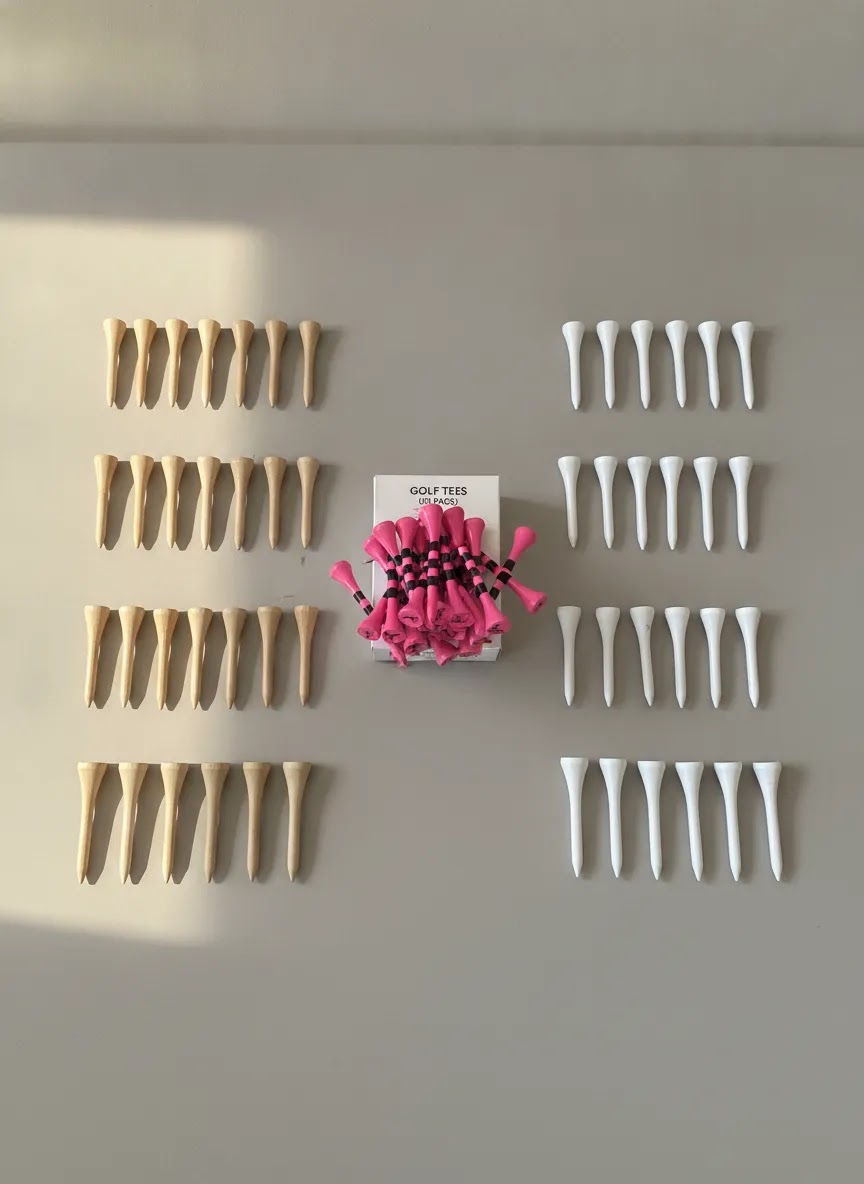
Most shoppers see a number like 2.75 inches or 3.25 inches and assume it maps directly to distance or performance. In reality, the length is mainly about setup consistency and whether the tee can reach your preferred height without feeling unstable.
| Golf tee length | Typical use |
|---|---|
| 1 1/2 inch | Irons on par 3s, low-tee shots, or practice situations where you want minimal tee above the ground |
| 2 1/8 inch | A common short choice for hybrids, fairway woods, or iron tee shots with a small amount of lift |
| 2 3/4 inch | A widely used standard length for many drivers and fairway woods, depending on tee height preference |
| 3 1/4 inch | Popular for modern drivers, especially if you like the ball higher at address or play a larger clubhead |
| 4 inch | A specialty extra long option for very high tee preferences or maximum height flexibility |
Common golf tee lengths and typical use
- 1 1/2 inch tees are typically used for irons on par 3s, low-tee shots, or practice situations where you want minimal tee above the ground.
- 2 1/8 inch tees are a common “short” choice for hybrids, fairway woods, or iron tee shots where you still want a small amount of lift.
- 2 3/4 inch tees are a widely used “standard” length, often suitable for many drivers and fairway woods, depending on how high you tee it.
- 3 1/4 inch tees are popular for modern drivers, especially if you like the ball higher at address or play a larger clubhead.
- 4 inch tees are usually a specialty “extra long” option for very high tee preferences or for players who want maximum height flexibility, though they can be more than most golfers need.
Practical setup guidance for tee height
Choose your tee based on the club you hit most often from the tee box, then adjust height from there:
- With a driver, many golfers prefer a higher tee, often with a portion of the ball above the top line of the driver at address. A 2 3/4 inch or 3 1/4 inch tee is usually easier to work with for that kind of setup.
- With a 3-wood or fairway wood, you typically want the ball lower than a driver tee height. A 2 1/8 inch or 2 3/4 inch tee often helps keep you from over-teeing it.
- With irons and many hybrids on par 3s, you are usually trying to create a clean strike with very little tee. That is where 1 1/2 inch and 2 1/8 inch tees are commonly used.
Longer tees can be more flexible, but that has limits. Very long tees can feel less stable if you try to tee it low. They can also be easier to snap when pushed into firm tee boxes. As a result, they may create extra waste if you routinely break or discard them after a single swing.
A simple buying tip for mixed play
You do not have to pick one length forever. If you play a typical mix of par 3s and driver holes, keeping two lengths in your bag often makes tee selection easier: a shorter tee for iron shots and a standard or longer tee for driver. This can reduce breakage, keep your setup more consistent, and help you avoid overusing a long tee for shots that do not need it.
Golf tee materials and designs you will see while shopping
Once you start browsing more than a basic pro shop rack, you will notice golf tees are not just “wood vs plastic.” Retailers carry multiple woods, alternative materials, and design features that can change feel, durability, and how consistent your setup is.
Materials beyond basic wood and plastic
- Bamboo tees are popular with golfers who like the look and feel of wood but want something that often holds up well across multiple swings. They are also common in event and gift buying because they can present as a bit more premium than the cheapest wood options.
- Birch and other hardwood tees are often chosen for a more traditional wood feel with a focus on consistency. Many golfers buy them simply because they are familiar and predictable.
- Plastic tees can prioritize durability and shape retention. Some golfers like that they can reuse a tee more times, others do not like the feel at impact or the look at address.
No material is guaranteed to improve performance. The practical goal is finding a tee that matches your preferred feel, does not become annoying to replace, and looks right for your setup or the event you are buying for.
Design features commonly marketed on tee packaging
A lot of “specialty” tee designs are really about consistency and convenience, not magic. These are some of the common features you will see:
- Painted vs natural finish. Painted tees can make color selection easy and improve visibility, while natural finishes often feel more classic and understated.
- Stripes or markings for consistent height. Some tees include printed lines so you can set the ball at the same height each time.
- Step tees. These have a built-in “stop” point designed to help you push the tee into the ground to a repeatable height. They can be useful if you struggle to tee the ball consistently, but they still depend on tee box firmness and personal preference.
- Low-friction or pronged styles. Some tees use shaped heads or prongs that are designed to reduce contact with the ball. The reality is that results vary by golfer and strike, and many golfers choose them mainly for durability or novelty rather than expecting guaranteed yardage gains.
How material and design affect event buying decisions
For tournaments, weddings, and corporate gifting, the “best” tee is often the one that looks intentional and stays consistent across the full order. Material and finish can influence that.
- Printability and finish. Some buyers prefer a smoother, cleaner finish because logos and text can look sharper and more legible.
- Color consistency. If you are matching a brand palette or wedding theme, a consistent tee color can matter more than micro-differences in durability.
- Perceived premium factor. Bamboo or cleanly finished hardwood tees often read as more giftable than the most basic tees, even when the functional difference is small.
For broader equipment guidance from the official governing body, the USGA is a useful reference point. For equipment education and player resources, you can also review materials from the PGA of America.
Ace of Clubs tee options
Ace of Clubs currently offers a simple, style-led tee selection at a flat $10 price point per 50-pack. That makes the choice less about price shopping and more about color preference, use case, and whether you want a clean neutral look or something more expressive.
Lime Golf Tees (50 Pack)
LIME GOLF TEES (50 PACK) are priced at $10 and sold as a golf tee pack in a bold lime color direction. For buyers who like high-visibility accessories or want a more playful setup, this kind of color choice can be more practical than it first appears because it is often easier to spot on the tee box after contact.
Hot Pink Golf Tees (50 Pack)
HOT PINK GOLF TEES (50 PACK) are also $10 for 50 tees. This is the most obviously expressive option in the current group. If you want golf tee colors that stand out in the bag, pair well with gift bundles, or reflect a specific personal style, this option makes that choice very clear.
Tiffany Golf Tees (50 Pack)
TIFFANY GOLF TEES (50 PACK) are priced at $10. This color direction tends to appeal to buyers who want something distinctive but still polished. It works especially well if you like coordinated accessories and want tees that feel premium rather than purely utilitarian.
White Golf Tees (50 Pack)
WHITE GOLF TEES (50 PACK) are priced at $10 and are the safest fit if you want a clean, traditional look. White is easy to match with nearly any bag setup, and it usually feels appropriate whether you are buying for yourself, a buddy gift, or a more understated event kit.
Across these four options, the core buying decision is straightforward: pick the color that best suits your preferences and intended use, then decide whether you need standard stock packs now or should explore Custom Golf Tees for a more branded or event-specific result.
Pros and Cons

Strengths
- Simple pricing at $10 per 50-pack makes comparison easy.
- Multiple color options support personal style, gifting, and event coordination.
- 50-pack quantity is practical for regular play without forcing a huge upfront order.
- Color-based selection is easy for shoppers who already know the look they want.
- Works well as an add-on purchase within a wider golf accessories order.
Considerations
- The available product details are limited, so buyers who want exact size specifications may need to confirm before purchase.
- Golfers comparing wood golf tees and plastic golf tees by performance will not find deep technical differentiation here.
- A 50-pack is convenient for personal use, but buyers seeking printed golf tees bulk quantities for large events may need a separate custom solution.
- Color-forward options may not appeal to golfers who prefer only neutral, traditional accessories.
Who these tees fit best
These packs are a strong fit for golfers who want everyday tees with more personality than generic pro shop stock. They also suit gift buyers building out a small accessory bundle, especially if color coordination matters. If you are shopping for a tournament, bachelor trip, wedding, or branded outing, the stock packs can help you test style direction before moving to personalized golf tees.
They may be less ideal if your first priority is advanced spec matching, such as exact tee length, highly technical low-friction designs, or very large bulk purchasing. In that case, your next step should be clarifying the role the tees need to play before you buy on appearance alone.
Ace of Clubs recommendation
If you are ready to buy now, Ace of Clubs is most useful for shoppers who want stylish golf tees without overcomplicating the purchase. The current lineup keeps pricing consistent, so you can choose based on visibility, personal taste, and gifting intent rather than chasing tiny price differences.
That is especially helpful if you are assembling a broader accessories package from the Golf Accessories collection or trying to keep a purchase inside the range covered by Golf Accessories Under $50. If your setup also leans premium, this shop luxury golf guide is another useful resource.
If your real goal is branding, event merch, or a more specific presentation, move from stock packs to the Custom Personalized Golf category and compare customization paths side by side. Read the full custom tee content, review your quantity needs, and decide whether an off-the-shelf pack or a customized order gives you the better fit.
How to pick the right golf tees
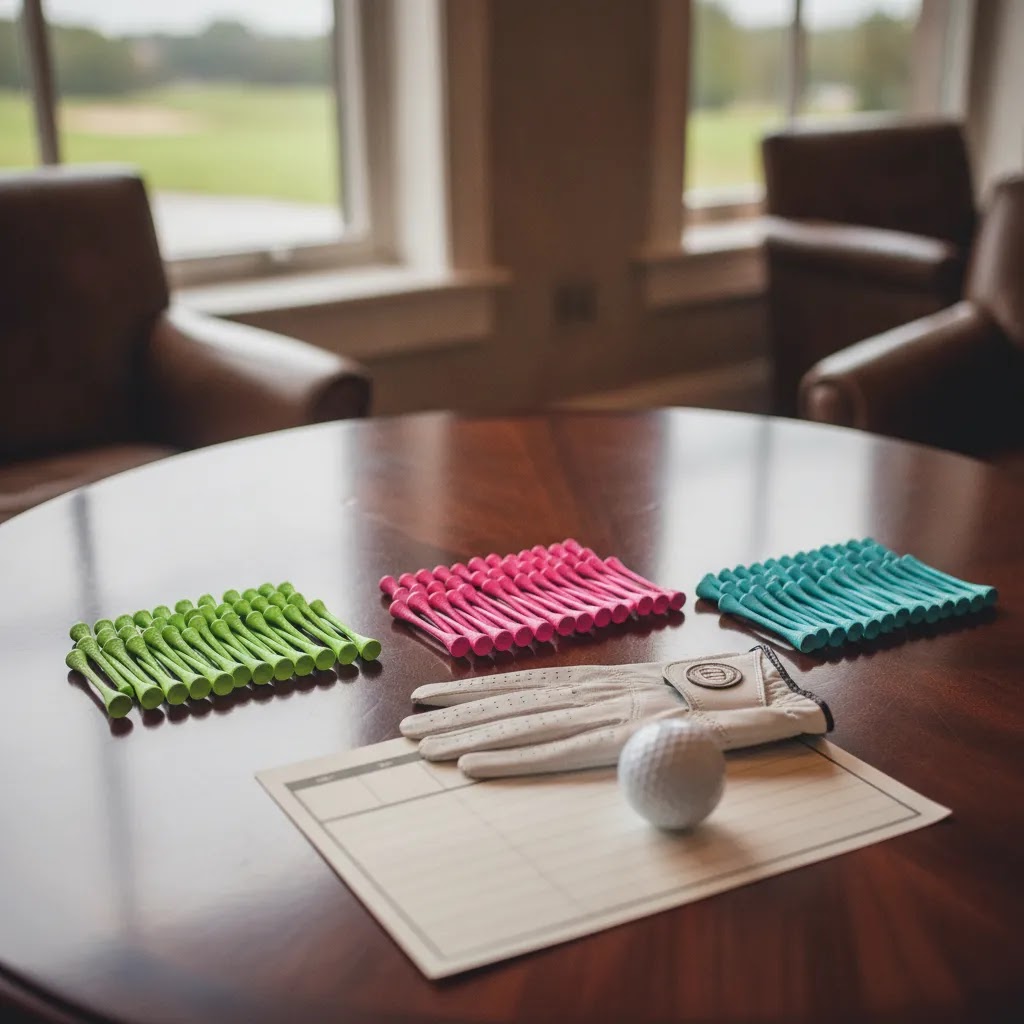
Buying golf tees gets easier if you sort your decision into five criteria.
1. Match the tee to the club you use most off the tee
If you are mainly buying for driver use, prioritize a tee length that gives you setup flexibility. If you want tees mostly for irons or par-3 shots, shorter sizes can make more sense. Buyers often regret choosing based only on appearance and then realizing the size is not suited to their normal tee height.
2. Decide whether visibility matters to you
Some golfers barely notice tee color. Others strongly prefer bright shades because they are easier to find after a shot. If you like to reuse tees, bold colors may offer practical value beyond style alone.
3. Separate personal use from event use
For weekly play, a standard 50-pack is often the simplest answer. For charity events, weddings, company outings, or member gifts, custom golf tees or personalized golf tees usually create a better impression. The more presentation matters, the more worthwhile customization becomes.
4. Be realistic about quantity
Bulk golf tees sound appealing, but large orders make the most sense only if you are sure about size, color, and branding. If you are still experimenting, a smaller pack is the lower-risk move. Once you know what works, printed golf tees bulk orders become easier to justify.
5. Treat tees as part of your accessory setup
Golf tees are often bought alongside markers, towels, headcovers, and gift items. If aesthetics matter to you, choose a tee color that complements the rest of your bag. That can make even a small purchase feel more intentional and polished. For example, coordinated golf headcover sets can help tie the whole look together.
Bulk, event, and customization logistics (what to confirm before ordering)
Bulk and custom orders are less about “finding a tee” and more about running a small production project. The product is simple, but the details decide whether the tees arrive usable, on time, and consistent with what you approved.
What to confirm before you place a bulk or custom order
- Tee length choice. Confirm the exact length being produced, and make sure it fits how most players at the event will tee it up. If your order is meant for mixed golfers, overly specialized lengths can create waste.
- Imprint method and placement. Ask how the artwork is applied and where it lands on the tee. Small placement differences can affect readability, especially with shorter tees.
- Number of print colors. More colors can look great, but they can also increase complexity. Confirm what is included and what changes if you add colors.
- Proofing process. Make sure you see a proof before production, and confirm who signs off. Typos and color mismatches are more common than people expect when timelines get tight.
- Lead times and shipping timelines. Confirm production time, shipping method, and when you need the tees in hand, not just when they ship.
- Reorders and consistency. If you expect to reorder for annual tournaments or recurring corporate events, ask how they handle repeat runs so the tee color and print remain consistent.
Quick quantity and packaging checklist for events
For tournament directors, wedding planners, and corporate buyers, a quick planning pass can prevent last-minute shortages:
- Quantity per player. Many events plan a small handful of tees per golfer rather than just one or two, since tees break, get lost, or get handed to a playing partner.
- Extras for range, carts, and gift bags. If tees are part of a welcome kit or giveaway table, plan extra beyond the exact player count.
- Packaging considerations. Decide whether you want tees loose in a bag, bundled as 50-packs, or split into smaller favor-style quantities. Packaging can change how premium the gift feels and how fast volunteers can distribute items.
How to reduce the risk of unusable tees
The reality is that bulk orders lock in your decision. To avoid being stuck with tees that do not match your needs, consider a few risk controls:
- Order a sample run when possible, especially if you are committing to a large quantity for the first time.
- Confirm specs in writing: length, color direction, finish, and printing details.
- Align branding colors with real-world materials. Screens can make colors look cleaner or brighter than they do on wood or bamboo.
- Plan reorders early if the event repeats. Last-minute reorders can limit options and increase the chance of mismatched colors between batches.
Custom tees can be a strong event detail, but they should be treated like any branded item. The goal is consistency and usability, not expecting the tee itself to change anyone’s results.
Frequently Asked Questions
What size golf tees should most golfers buy first?
For many golfers, a standard or slightly longer tee is the safest starting point for driver use because it gives more flexibility in tee height. If you mostly buy tees for iron shots on par 3s, shorter tees may feel better. The right choice depends on clubhead size, setup preference, and how high you like the ball at address.
Are wood golf tees better than plastic golf tees?
Not universally. Wood golf tees remain the traditional choice and are popular for their familiar feel and simple presentation. Plastic golf tees may last longer, which can reduce replacement frequency. Most golfers should choose based on durability preference, look, and comfort rather than expecting one material to create a guaranteed performance advantage.
Do golf tee colors actually matter?
Yes, though mostly for visibility and style rather than shot outcome. Bright golf tee colors can be easier to spot after impact, which may help if you like to reuse tees. Neutral colors often look more classic. For gifts, team kits, and events, color also shapes how coordinated and premium the package feels.
What are custom golf tees best for?
Custom golf tees are often best for tournaments, weddings, bachelor trips, corporate outings, member gifts, and branded giveaways. They can add identity to a small item that golfers actually use. If the purpose is everyday personal play, stock packs are usually simpler unless you have a strong preference for personalization.
How many tees are enough for personal use?
A 50-pack is a reasonable quantity for many golfers because it offers enough tees for repeated rounds without becoming excessive. Actual usage depends on how often you play, whether you reuse tees, and whether you lose or break them frequently. Heavy players may move through a pack faster than occasional golfers.
Should I buy bulk golf tees or smaller packs?
Smaller packs are usually better if you are still testing color, size, or material preferences. Bulk golf tees make more sense once you know exactly what you want or need large quantities for an event. Buying in bulk too early can leave you stuck with tees that do not fit your setup or branding goals.
Are personalized golf tees a good gift?
They can be, especially for golfers who appreciate details and use accessories regularly. Personalized golf tees work well in gift boxes, event favors, and themed bundles with balls or towels. The best results usually come from matching the color and style to the recipient rather than treating personalization as automatically meaningful on its own.
What makes the best golf tees for gifts or events?
The best golf tees for gifting usually balance usability and presentation. Color choice, packaging, and coordination with the rest of the gift matter almost as much as the tees themselves. For events, consistency across the order is key. That is where custom or printed solutions may offer more value than generic stock packs.
Can golf tees and balls be bundled together?
Yes, and they often make sense together because they are practical, easy to package, and suitable for a wide range of golfers. A tee-and-ball bundle works well for tournaments, thank-you gifts, or entry-level accessory kits. Just make sure the style of the tees matches the tone of the gift, whether that is classic or more playful.
What are the best golf tees to use?
The best golf tees to use are usually the ones that match your preferred tee height and the club you hit most often off the tee. Many golfers do well with a standard length for drivers and a shorter length for par 3s. Material choice is typically about feel and durability, not guaranteed results, so it is reasonable to test a couple options and stick with what gives you the most consistent setup.
What tees do most PGA players use?
Many PGA Tour players use wooden tees in a length that matches their preferred driver tee height, often in a standard-to-long range. Some players use specialty designs, but it is not a universal setup across the field. At the elite level, the priority is repeatable height and a familiar look at address, and players tend to stick with what they trust.
Do golf tees really make a difference?
They can make a difference in setup consistency and how the ball looks to you at address, which can affect confidence and routine. Differences in distance or ball flight are not guaranteed and usually depend on strike quality, club delivery, and conditions. If you change tee height or switch to a design that helps you repeat your preferred height, you may notice more practical benefit than switching materials alone.
What tees does Rory McIlroy use?
Pro players can change equipment choices over time, and specific tee brands or models can vary by tournament and personal preference. What is generally consistent for players at that level is the concept: a tee that supports a repeatable height and a clean look at address for their driver setup. If you are trying to copy a pro, focus first on tee height and consistency, since that is the part you can reliably control.
Key Takeaways
- The right golf tees depend more on size, material preference, visibility, and use case than on hype.
- Ace of Clubs keeps the decision simple with four color-led 50-pack options at $10 each.
- Bright tee colors may help with visibility and can add style value for gifts or coordinated setups.
- Stock packs suit everyday use, while custom and personalized golf tees make more sense for events and branded orders.
- If you are unsure about quantity or customization, start small and scale up after you confirm your preferences.
Conclusion
A good golf tee purchase should feel boring in the best possible way: clear purpose, fair price, and no second-guessing once it lands in your bag. If you want straightforward everyday options with personality, the current Ace of Clubs tee packs cover the basics cleanly at $10 for 50 tees.
Start with the color that best fits your eye and your gear. If your project is bigger than personal play, such as gifts, outings, or branded merchandise, shift toward custom options instead of forcing a stock pack to do a custom job. Ultimately, browse the tee lineup, compare your use case, and buy the option that fits how you actually play or present the game.
Product availability, pricing, colors, and specifications may change over time. Review current product pages before purchase. Performance preferences for golf tees vary by golfer, club setup, and course conditions, so no single tee type is guaranteed to improve results. For custom or bulk orders, confirm quantities, lead times, and design details before placing an order.


