


Golf accessories for beginners should be simple: start with tees, a hat, a towel, a glove if you use one, and a ball marker with a divot tool. These basics help you play, stay comfortable, and keep pace. Most premium add-ons can wait until you know your habits.
Starting golf gets expensive fast if you buy like a low-handicap player instead of a true beginner. The better approach is simpler: build a starter kit around the accessories that help you get on the course, keep pace, and avoid common frustrations.
That means separating actual needs from nice-to-have extras. In this guide, you’ll find golf accessories for beginners that deserve your money first, the upgrades that can wait, and a few premium items that make sense only after you know your habits. If you want a broader look beyond first-purchase essentials, see Best Golf Accessories for Men for a wider roundup of useful options.
What Golf Accessories for Beginners Need First
The best beginner golf gear is not the longest list. It is the shortest list that solves real on-course problems. New golfers usually benefit most from accessories that are inexpensive, easy to replace, and useful every single round. Tees, a comfortable hat, weather-appropriate basics, and a few organizational items matter more early on than premium add-ons.
Most beginners do not need luxury upgrades in every category right away. A premium grip, leather accessory, or style-focused item can be a great purchase, but only if it improves comfort, confidence, or your everyday use. That is the standard worth using.
A good starter golf accessories plan usually follows this order:
- Buy low-cost essentials first
- Prioritize comfort and course practicality
- Skip specialty items until you play regularly
- Upgrade one touchpoint at a time, such as your putter grip or apparel
If you are also thinking about bag protection and organization, How to Choose Golf Headcovers is helpful once you move beyond the basic kit stage.
Golf Accessories for Beginners: The Starter Kit
If your goal is to buy only what you actually need, start with this five-part setup:
- Golf tees for practice sessions and regular rounds
- A comfortable hat for sun, sweat, and visibility
- A glove for grip stability, if you use one
- Ball markers and a divot tool for course etiquette
- A small towel for clubface and hand cleanup
After that, your next purchases should depend on how often you play. If you find yourself golfing weekly, then premium personal-touch items begin to make more sense. That could mean a higher-end grip, better bag organization, or apparel that holds up better in heat and humidity.
Where beginners go wrong is buying aspirational accessories before friction-reducing ones. A starter kit should remove hassle. That is why basic consumables and comfort items come before status items. Premium pieces are best added once you know they fit your routine and preferences.
| Accessory or category | Buy timing | Why it belongs there |
|---|---|---|
| Tees | Buy first | They are cheap, practical, and likely to get used right away. |
| Hat | Buy first | It helps with sun, sweat, and visibility every round. |
| Glove, ball marker, divot tool, towel | Buy first | These basics support grip, etiquette, and cleanup. |
| Bag organization and better apparel | Buy later | They make more sense once you play often. |
| Premium grip or style-focused accessory | Buy later | These are best once you know your routine and preferences. |
Golf Bag Essentials for Beginners (What to Keep in Your Bag)
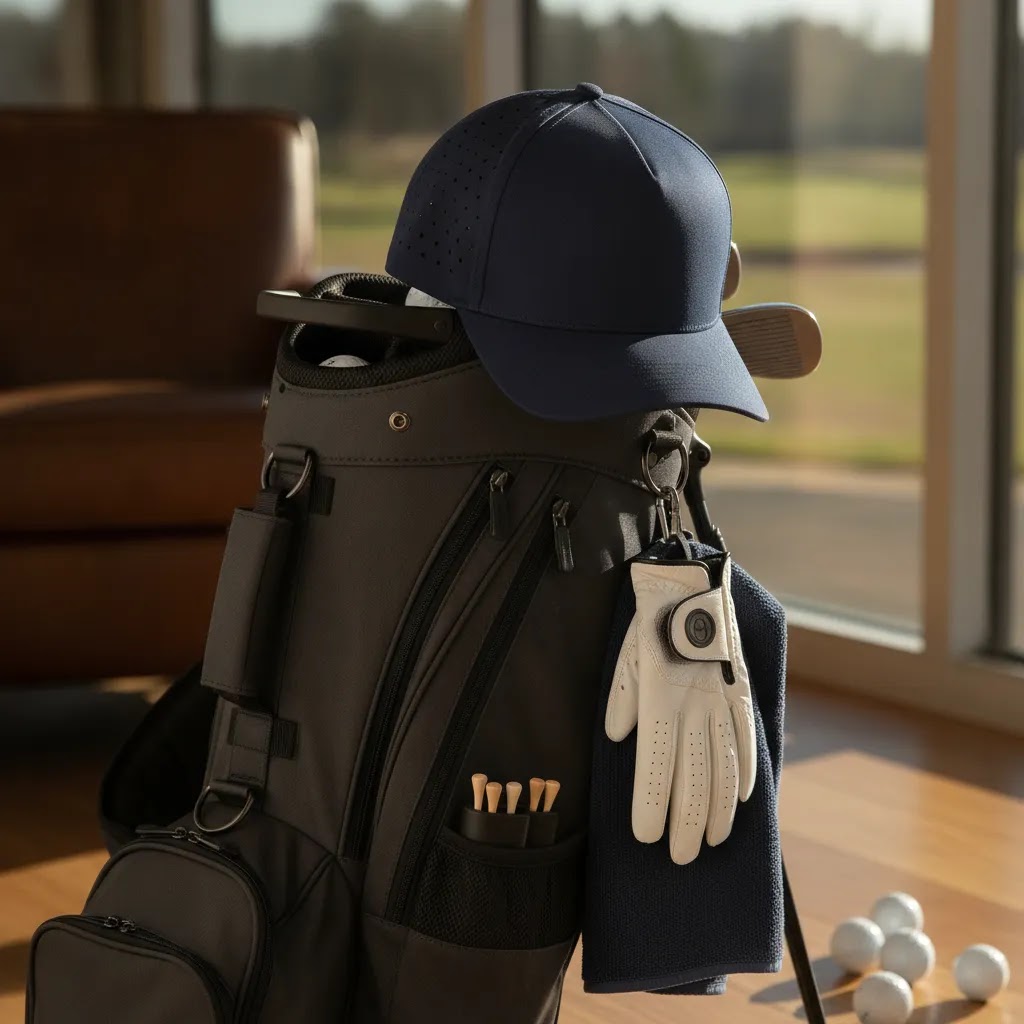
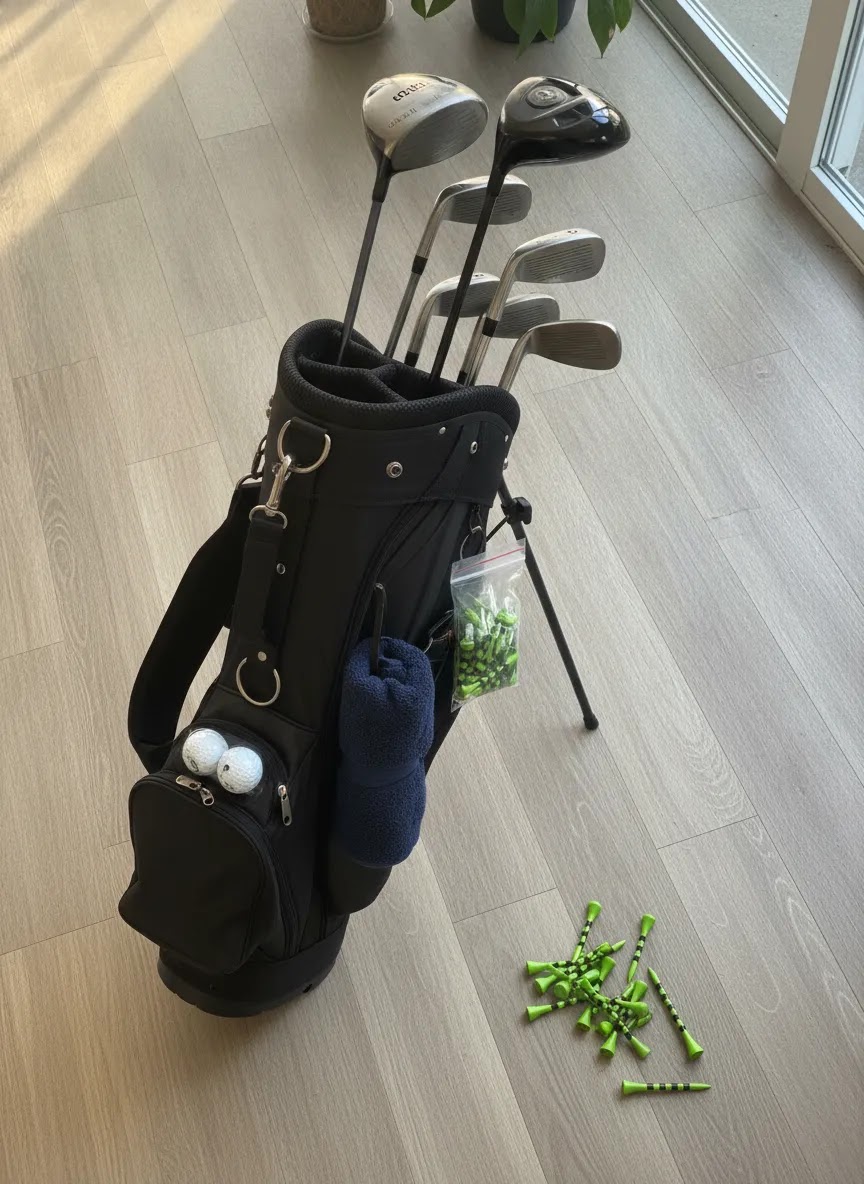
Here’s the thing: buying the right starter accessories is only half the equation. The other half is showing up to the first tee with the small always-in-the-bag items that keep a round moving and stop minor issues from turning into a frustrating day.
A good rule of thumb is to pack for the round you are actually playing, not the round you imagine playing in a year. If an item is unlikely to come out of the bag more than once a month, it probably does not need to live there permanently.
Golf accessories for beginners: an always-in-the-bag checklist
- Extra golf balls, because beginners typically lose more balls than expected
- A small bottle of water, or a plan to refill at the course
- Sunscreen and lip balm for sun and wind exposure
- Bug spray if you play early, late, or near water
- A spare glove (or at least a backup plan) in case you play in humidity or rain
- Basic first-aid items like bandages for blisters and small cuts
Course-readiness items that help pace of play
That pace is usually about preparation, not speed walking. A couple of small add-ons can keep you organized and reduce dead time between shots.
- A pencil, because you will need it more often than you think
- A scorecard holder is optional, but anything that keeps your card from getting wet or crumpled helps
- If you want distances, a simple rangefinder alternative can be a phone app or course markers, and it is fine to play without a distance device at first
Don’t overpack
The easiest way to avoid bag clutter is to cap your just-in-case items. Pick one small pouch for extras. If it does not fit, it does not go. A lighter, simpler bag also tends to make walking, carrying, or loading the cart more comfortable.
Quick restock reminder before you leave home
Consumables disappear quietly. As a result, a 20-second pre-round check can save you from buying overpriced replacements at the pro shop.
- Tees: bring enough for the round plus a few extras
- Balls: restock if you are under a sleeve or two
- Glove: check for tears, stiffness, or a slick palm
- Towel: make sure it is actually in the bag and not still in your laundry
For more detail on golf tees, sizes, and customization options, you can compare beginner-friendly choices before you stock up.
For sun and sweat management, golf hats are one of the simplest comfort upgrades you can make early.
Accessory Spotlights
LIME GOLF TEES (50 PACK)
LIME GOLF TEES (50 PACK) are the easiest example of a true beginner buy. At $10, they are affordable, practical, and likely to get used right away at the range or on the course. A 50-pack gives a new player enough volume to avoid running out quickly, which matters because beginners tend to lose or break tees more often than experienced golfers.
This is the kind of starter accessory worth buying before almost anything decorative. It does a job, costs very little, and helps you practice without overthinking it.
NAVY PERFORMANCE HAT
NAVY PERFORMANCE HAT sits in the sweet spot between style and function. At $35, it is still accessible for most beginners, while giving you a piece you can wear every round. For new golfers, hats are not just about appearance. They help with sun management, sweat control, and keeping your eyes more comfortable in bright conditions.
If you are building a first golf accessories list, a good hat deserves a place near the top because it supports comfort from the first tee to the last putt.
PLATINUM ALLIGATOR PUTTER GRIP
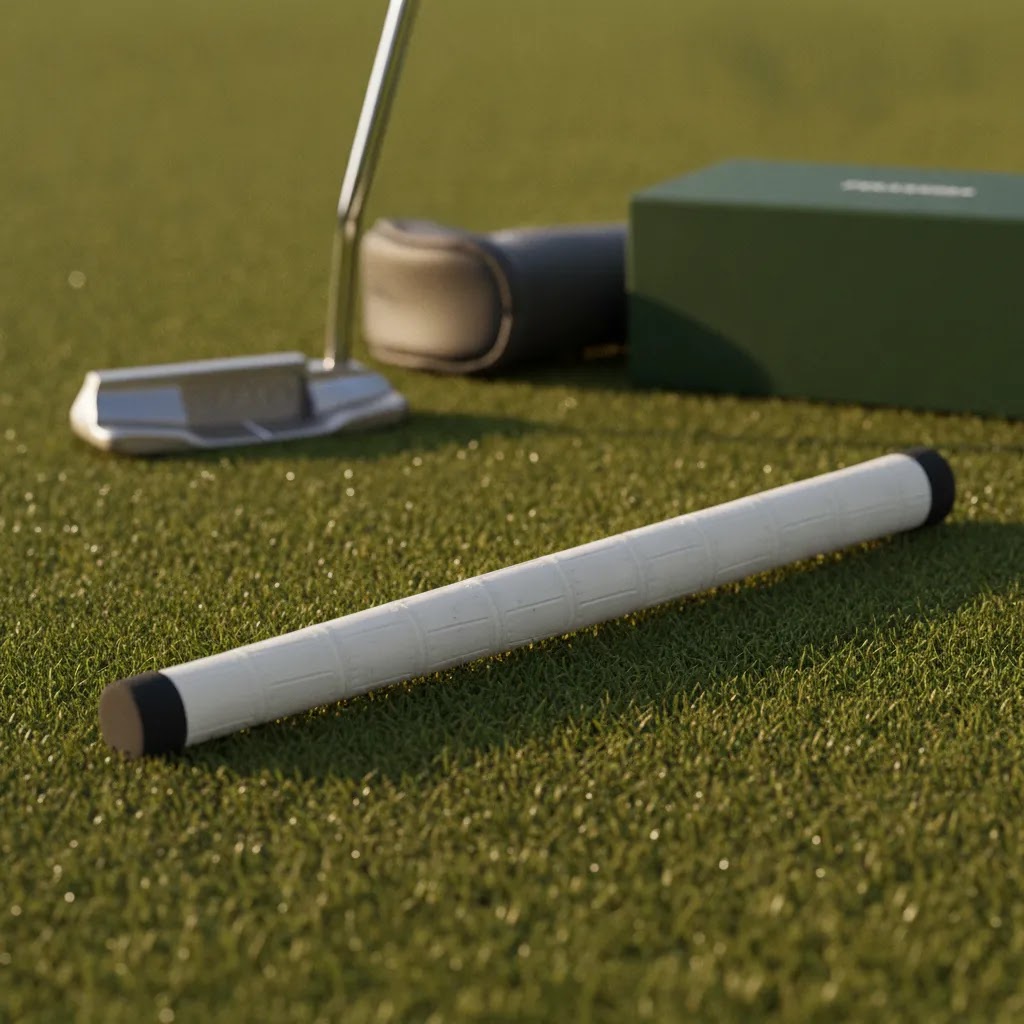
PLATINUM ALLIGATOR PUTTER GRIP is a premium upgrade rather than a first-day necessity. Priced at $150, this genuine leather putter grip is aimed more at golfers who already know they care about feel, detail, and a luxury finish. New golfers may appreciate the craftsmanship, but many should wait until they understand their putting preferences before making this kind of upgrade.
For the right buyer, though, it can be a satisfying way to personalize the club used on every green. It belongs in the buy-later bucket for most beginners, not the buy-first bucket.
BLACK SHARK WATCH BAND
BLACK SHARK WATCH BAND costs $50 and falls outside the essential beginner category. It is more of a lifestyle accessory than a golf-play requirement. That does not make it a poor purchase. It just means it should come after your core kit is covered.
If you enjoy coordinated accessories and want your off-course and on-course style to match, it can add personality without reaching the price level of a premium club upgrade.
For most new players, this is a nice once-the-basics-are-handled item rather than a true starter golf accessory.
Pros and Cons
Strengths
- A beginner-first buying plan keeps your early spending focused on items you will use immediately.
- Low-cost essentials such as tees and hats usually improve convenience without adding much budget pressure.
- This approach reduces clutter and helps you learn what matters before upgrading.
- It leaves room for thoughtful premium purchases later, including personalized or luxury accessories.
- Comfort-oriented accessories can make early rounds more enjoyable and less distracting.
Considerations
- A minimal starter kit may feel underwhelming if you enjoy buying coordinated gear right away.
- Some premium accessories are emotionally satisfying even if they are not the most practical first purchase.
- Beginners who play often may outgrow a bare-bones setup quickly and need upgrades sooner than expected.
- Style items can still have value, but their practical impact is usually lower than core on-course basics.
Who This Approach Is For
This article is for new golfers who want a clear answer to what golf accessories do I need as a beginner. It fits players building their first kit, gift buyers trying not to overspend on the wrong items, and casual golfers who expect to play a few rounds before making bigger upgrades. It is also useful if you like premium design but want to spend in the right order.
If you already play often and know your preferences, you may be ready for accessories beyond the starter stage, including more specialized storage, apparel, and club-protection items. Players exploring style-driven add-ons may also want to read the Golf Belt Guide for another category where function and presentation meet.
Ace of Clubs Picks Worth Considering
Ace of Clubs is most helpful here as a source for selective upgrades, not as a reason to overbuy. For a beginner, the practical first add is the LIME GOLF TEES (50 PACK). The NAVY PERFORMANCE HAT also makes sense early because it offers repeat-use comfort and clean style at a moderate price. The PLATINUM ALLIGATOR PUTTER GRIP is better treated as a premium later-stage purchase, while the BLACK SHARK WATCH BAND works as a personal style addition once your starter kit is complete.
If you want to browse by category rather than item, explore Golf Accessories. If you are shopping for someone new to the game, the Golf Gifts collection can help narrow down accessories that feel thoughtful without being overly technical.
How to Choose Golf Accessories for Beginners
The easiest way to choose beginner golfer accessories is to score each item against five questions.
1. Will you use it every round?
Frequent-use accessories deserve the earliest budget. Tees, hats, towels, gloves, and simple repair tools usually pass this test. Decorative items often do not. If the accessory does not come out of the bag regularly, it probably should not be one of your first purchases.
2. Does it reduce frustration?
Early golf is full of small annoyances: losing tees, sweaty hands, sun in your eyes, dirty grips, and disorganized pockets. Good starter accessories reduce those problems. That is why low-cost utility items usually outperform premium extras for a new player’s first spending decisions.
3. Is the price proportional to your experience level?
This is where many beginners overspend. A $10 consumable that gets used constantly may offer better value than a $150 upgrade you cannot yet evaluate properly. Expensive accessories are not bad purchases. They just make more sense once you can tell what fit, texture, weight, or finish you personally prefer.
4. Does it improve comfort or confidence?
Some accessories earn their place because they make you feel more settled on the course. A reliable hat can help you focus. A premium grip may improve confidence if you are already sensitive to putter feel. Style also matters, just not before the basics are covered. If an item makes you more likely to practice or play, that has real value.
5. Can it wait until later?
This single question keeps a beginner golf accessories list under control. If the answer is yes, move it to phase two. That includes many premium personalization pieces, niche storage add-ons, and lifestyle items. Buy the gear that gets you through your next few rounds first. Then add the things that refine your experience.
A practical buying order often looks like this:
- Tees, glove, towel, ball marker, divot tool, and hat
- Weather and comfort upgrades
- Bag organization and club protection
- Style-focused and premium personalization pieces
If you later expand your setup, headcovers are one of the more sensible non-essential upgrades because they protect clubs and tidy up your bag. That topic is covered in How to Choose Golf Headcovers.
In addition, a luxury golf bags guide can help once you move from bare essentials to long-term storage and organization upgrades.
What You Don’t Need Yet (Common Beginner Accessory Mistakes)
The biggest accessory mistake beginners make is not buying too little. It is buying too much, too early, and then carrying a bag full of items that never get used. If your goal is to keep spending smart, it helps to be explicit about what to skip for now.
A skip-for-now list that protects your budget
- Training aids that promise fast fixes, especially if you do not practice consistently enough to evaluate them
- Multiple specialty gloves, because most beginners only need one primary glove and possibly one backup
- Too many ball types, since your swing and strike pattern will change, and mix-and-match balls can add confusion
- Premium gadgets you are not sure you will use every round, including heavy electronic add-ons
- Bulky bag add-ons that create clutter and make it harder to find the basics quickly
A simple filter for hype purchases
If you are deciding whether something is worth buying, use this quick test: only buy it if it solves a problem you have already had in the last two rounds. If you have not actually run into the problem yet, wait. Most must-have gadgets become obviously useful only after you have enough reps to notice what slows you down.
Spend on repeat-use essentials before style or personalization
The reality is that early dollars should go to items you touch constantly: tees, a reliable glove, a towel, and sun protection. After that, put money into comfort and durability. Once those are covered, style-focused accessories can be a smart buy because they are fun and personal. They just tend to have lower practical impact on your next few rounds than the basics.
Beginner Buying Rules (Including the 70/30 Rule in Golf)
If you want one framework that keeps your beginner golf gear spending under control, the 70/30 rule is a useful way to think. It is not an official rule of golf. Think of it as a prioritization tool.
What the 70/30 rule means for golf accessories for beginners
Most of your results in early golf tend to come from the basics that affect the most shots. For many players, that is full-swing fundamentals, contact quality, and simple on-course routines. The smaller, marginal gains often come later from niche upgrades and specialized add-ons.
Translated into accessories, the idea is simple: put about 70 percent of your accessory budget and attention toward repeat-use essentials and friction-reducers. Then use the remaining 30 percent on comfort upgrades or fun purchases once the basics are handled.
How to apply 70/30 to accessory decisions
- 70 percent: repeat-use basics like tees, a glove, a towel, a hat, and ball markers with a divot tool
- 30 percent: comfort and preference upgrades, such as nicer materials, premium finishes, or style-driven accessories you will still use often
If an accessory is not helping you start rounds prepared, keep your hands and clubfaces clean, manage sun or sweat, or handle basic etiquette, it probably does not belong in the first 70 percent.
Example budget split
For a true beginner playing occasionally, you might keep things simple and relatively low-cost: about $30 to $80 on basics you will actually use, then $0 to $30 on non-essentials you genuinely enjoy. For a weekly player, the same concept can scale up: you might spend $80 to $150 on repeat-use basics and replacements over time, then $30 to $75 on upgrades that improve comfort or personalization once you know what you like.
These are not fixed numbers and they may vary based on local prices, how often you lose balls, and your course’s typical weather. The point is the ratio: cover what you need for most rounds first, then add extras that make the experience more enjoyable.
For etiquette basics such as repairing ball marks and keeping pace, the USGA is a useful reference. For sun safety guidance during long rounds, see the CDC sun safety guide.
Frequently Asked Questions
What golf accessories do I need as a beginner?
Start with accessories that support actual play: tees, a glove if you use one, a towel, a hat, a ball marker, and a divot tool. Those items are inexpensive, useful, and easy to understand. Most luxury or highly specialized accessories can wait until you play often enough to know your preferences.
What is the best golf accessory to buy first?
Golf tees are usually the easiest first purchase because they are cheap, necessary for many shots, and frequently lost or broken. A comfortable hat is also high on the list because it helps with sun and sweat during every round. The best first buy is usually a simple item you will use immediately.
Should beginners buy premium golf accessories for beginners right away?
Usually not across the board. Premium accessories can be worth it, but most beginners benefit from using entry-level essentials first. Once you know how often you play and what details matter to you, then premium upgrades become easier to justify. A luxury putter grip may appeal later more than it helps on day one.
Is a putter grip a good beginner upgrade?
It can be, but it is rarely the first upgrade most new golfers need. Putting feel is personal, and beginners often need more time before they can judge grip preference well. If you already care about premium materials and club customization, it may be worthwhile. Otherwise, start with more basic accessories first.
How much should a beginner spend on golf accessories?
A modest starter kit can stay fairly affordable if you focus on necessities. Consumables and comfort items often deliver the best value early. Budget more carefully for style or luxury pieces, especially if they do not directly improve your next few rounds. Spending should match how often you expect to play.
Are golf hats really necessary for beginners?
They are not mandatory, but many players find them very useful. A good hat can improve comfort in bright sun, help manage sweat, and keep you more focused over a long round. That makes it one of the more practical beginner golf accessories, especially in warm-weather regions.
What accessories are safe to skip at first?
Most beginners can delay premium customization items, lifestyle accessories, and niche organizational add-ons. That does not mean those products lack value. It just means they are not urgent. If an item does not solve a problem you expect to face in your next round, it probably belongs on the later-buy list.
What makes a good golf gift for a beginner?
The safest gifts are practical and low-pressure: tees, hats, towels, and other simple accessories. They are easy to use, fit a wide range of players, and do not require detailed knowledge of swing style or equipment specs. That is why functional accessories tend to outperform highly personalized club-related gifts for beginners.
What are must-have golf accessories?
Must-have golf accessories are the ones you will use every round and that prevent common frustrations: tees, a towel, a hat for sun and sweat, a ball marker with a divot tool, and a glove if you prefer playing with one. Many players also keep a few extra balls in the bag, plus sunscreen or water depending on the weather.
What accessories should every golfer have?
Most golfers benefit from a small set of basics that support pace, etiquette, and comfort: tees, a towel, ball markers, a divot tool, and sun protection. After that, what every golfer should have depends on how and where you play. For example, a spare glove can be helpful in humid climates, while bug spray may matter most for early or late tee times.
What are some essential golf equipment for a beginner?
On the accessory side, essential beginner items usually include tees, a glove, a towel, a hat, and a ball marker with a divot tool. The broader equipment list also includes clubs and golf balls, but for many true beginners, the most important accessory decision is keeping the kit simple enough that it is easy to pack, restock, and use correctly during a round.
What is the 70/30 rule in golf?
The 70/30 rule is a budgeting and prioritization idea that can help beginners avoid overspending on low-impact add-ons. It suggests putting most of your attention and spending toward the basics that affect most shots, then using a smaller portion on upgrades once your essentials are covered. For accessories, that often means spending most of your money on repeat-use items like tees, a glove, a towel, and a hat, and saving the rest for comfort upgrades or style-focused purchases you will still use regularly.
Key Takeaways
- Beginners should buy practical, repeat-use accessories before premium upgrades.
- Tees and a comfortable hat are two of the smartest first purchases.
- Luxury items can be excellent later, but many are better as phase-two buys.
- A simple starter kit reduces cost, clutter, and early frustration.
- The right accessory order matters more than owning a large number of accessories.
Conclusion
The right golf accessories for beginners are the basics that make your first rounds easier and more comfortable. Start with utility: tees, a hat, and a few small essentials that support comfort and course readiness. Then add premium pieces only when you know they fit your playing habits.
That buying order keeps waste down and helps you build a kit you will actually use. If you want to continue exploring thoughtfully made options, browse the Ace of Clubs Golf Accessories selection and check category-specific resources as your game and preferences develop.
This article is for general informational purposes only and does not constitute professional golf instruction, equipment fitting advice, or a guarantee of performance improvement. Product suitability may vary based on playing frequency, personal preference, course conditions, and budget. Prices and availability may change. Always review current product details before purchasing, and use golf equipment and accessories in accordance with course rules and standard safety practices.


