


You can usually spot a rushed golf event order before the first group tees off. The hats arrived, but the logo looks tiny. The gift items feel cheap in hand. Half the accessories do not match the tone of the brand, and the premium giveaway budget somehow got spent on products guests leave in the cart basket. If you are shopping for custom golf accessories bulk, that is the real challenge. You are not just buying items. You are building an experience for clients, employees, sponsors, or tournament players.
The 3 things that matter most when buying custom golf accessories bulk: Pick items people will actually use on the course. Match decoration method to the material and product shape. Build your timeline around proofs, production, and delivery buffers.
This article focuses on branded gear for corporate events, tournaments, and large team orders. You will see who these products make sense for, what details separate polished custom golf promotional items from forgettable ones, what price ranges usually buy, and how to avoid the ordering mistakes that create stress a week before your event.
Contents

- What this guide covers
- Who bulk orders fit best
- How to evaluate event-ready gear
- Price ranges for bulk orders
- Minimums, “No Minimum” claims, and how bulk pricing really works
- Common ordering mistakes
- Ordering workflow: proofs, samples, and production timelines (step-by-step)
- Sample product directions
- Final buying checklist
- Frequently Asked Questions
What this guide covers
This guide is built for buyers who already know they want branded golf gear but need help choosing the right format, quality level, and order plan. It is especially useful for corporate outings, charity scrambles, sponsor gifts, team kits, and member-guest events.
If you need a broader overview of personalization formats, product types, and gifting ideas, start with Personalized Golf Accessories and then come back here for the bulk-order decision side.
Who bulk orders fit best
Bulk custom golf gear is right when consistency matters. You want the same logo treatment across gifts, player packs, staff gear, sponsor thank-yous, or hospitality items. You also want predictable budgeting and fewer one-off ordering headaches.
Best for corporate events and tournaments
These buyers usually care about brand presentation as much as utility. A charity tournament host may want memorable golf event gifts. A company hosting top clients may want something players keep in the bag after the event. A college or private team may want matching accessories that feel coordinated, not pieced together from random vendors.
Best for teams that need repeatable branding
If you expect to reorder later, standardizing your artwork, item mix, and quality tier can save time. This matters for annual tournaments, recurring sales incentives, and hospitality programs.
Who should not buy custom golf accessories bulk
If your event is very small, your attendee list is uncertain, or you only need a few personalized gifts, bulk ordering may create waste. It may also be the wrong fit if your logo artwork is not finalized or your timeline is extremely short. In those cases, a smaller made-to-order mix from a Custom Personalized Golf collection may be a smarter path.
How to evaluate event-ready gear
Start with use on the course, not just visual appeal
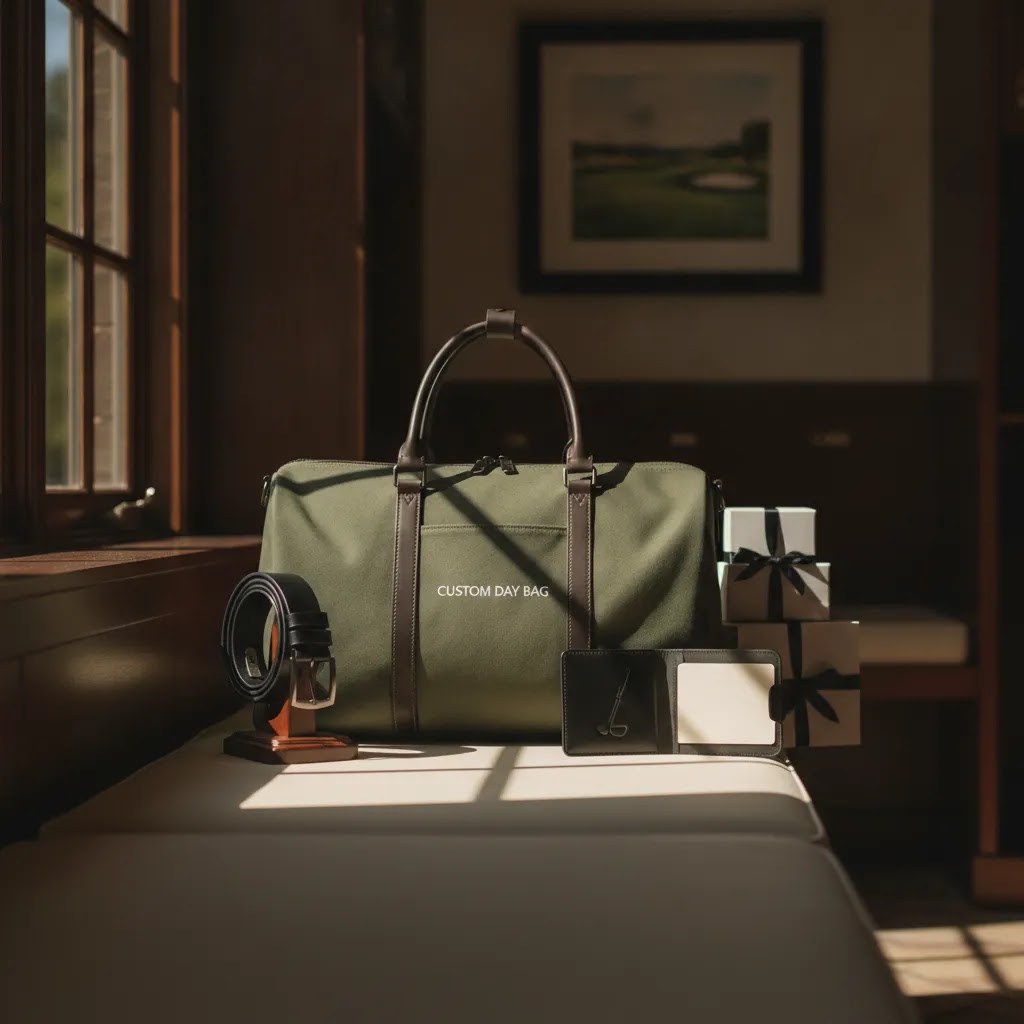
The most successful corporate golf accessories are items players naturally reach for during a round or while traveling to one. Scorecard holders, headcovers, belts, hats, tees, and valuables pouches all have a practical role. Decorative items can still work, but utility usually increases retention and perceived value.
For example, a scorecard holder used every round gives your logo repeated exposure. A novelty item with no clear use often becomes event-day clutter.
Choose materials that match the audience and occasion
Material sends a message before anyone notices the logo. Cork and bamboo can feel lighter and more budget-conscious. Full-grain leather, Italian calfskin, baseball glove leather, and alligator finishes create a more elevated impression for executive gifting or sponsor packages.
Ace of Clubs offers several examples of this spectrum within Golf Accessories. A Cork Golf Scorecard Holder at $50 suits larger quantity events that need a practical branded item. At a higher tier, the Black Alligator Leather Golf Scorecard Holder & Yardage Book Cover at $125 targets buyers who want a more premium gift feel.
Match the branding method to the product surface
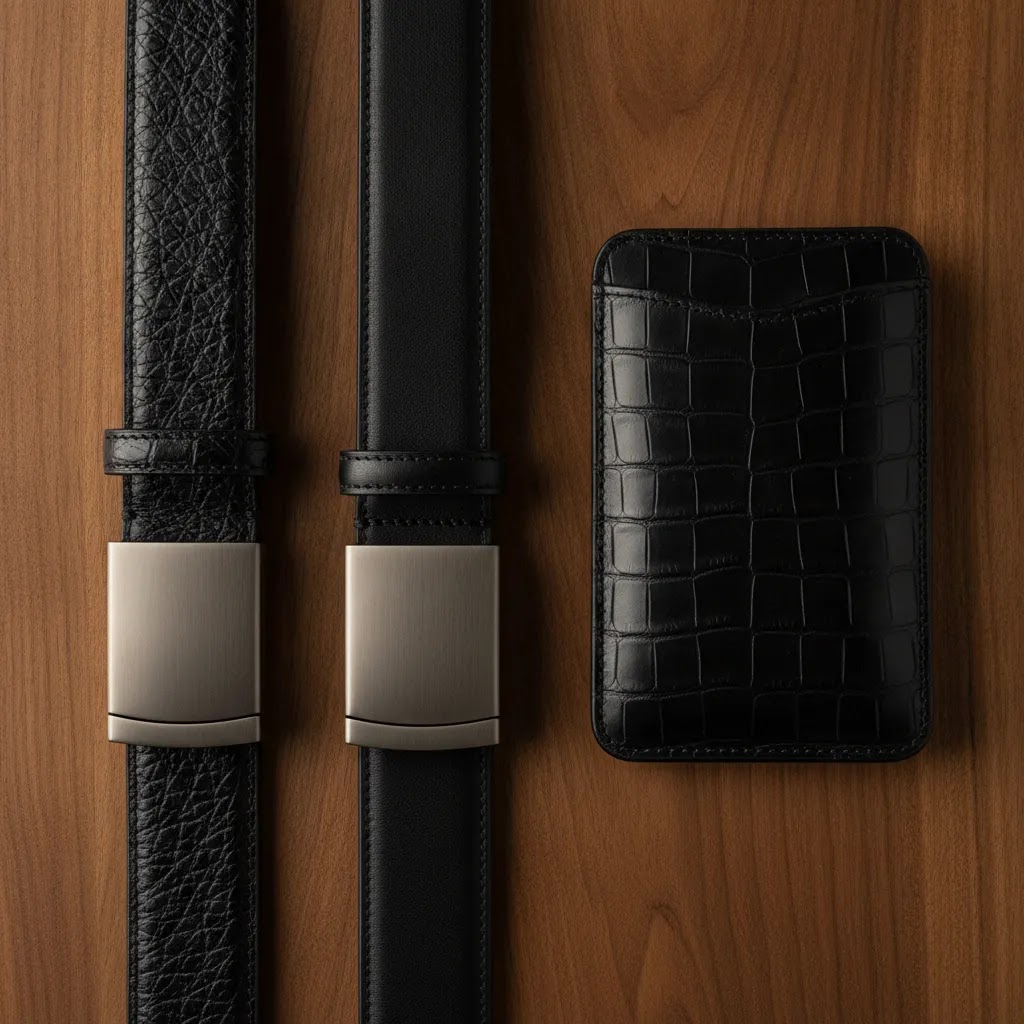
Not every logo works equally well across every item. Embroidery can look excellent on hats, some headcovers, and certain textile products. Laser engraving often suits leather goods, scorecard holders, and wallets where detail and restraint matter more than bright color.
What to look for: clean lines, enough contrast, and a logo scaled to the item. What to avoid: tiny text, fine gradients, or overcomplicated marks on small surfaces. Custom logo golf accessories should look intentional from three feet away, not just in a digital proof.
Check whether the product is truly customizable
Some items only allow a single decoration area. Others let you choose size, stitch color, buckle finish, interior color, or monogram placement. That difference matters in corporate gifting, especially when one item is doing more than one job, such as representing the company, thanking a sponsor, and feeling premium enough to keep.
For instance, the Custom Leather Stand Golf Bag starts at $1000 and includes custom embroidery with three logos included. That level of customization fits a premium recognition or sponsor package, not a mass giveaway.
Lead time is often more important than buyers expect
Bulk custom golf gear can involve artwork approval, production scheduling, personalization, and shipping coordination. Made-to-order items may also have longer production windows than stock products. If your tournament date is fixed, the calendar should drive the item mix.
Ask early about proof approval, minimum order quantities, partial shipment options, and whether the quoted timeline includes transit. Custom golf giveaways become risky when you approve artwork too late and leave no margin for corrections.
Order mix matters more than chasing one perfect item
Many successful buyers split their order into tiers. One practical item goes to every player. A better item goes to sponsors, VIPs, or winners. That structure usually produces a stronger experience than spending the whole budget on one medium-impact product.
If your event also needs lower-cost add-ons, related options like Custom Golf Balls in Bulk or Custom Golf Tees can help fill player gift bags without forcing every line item into a premium tier.
Popular bulk custom golf accessory categories (what is actually available)
If you are building a player pack or sponsor bundle, it helps to treat bulk golf accessories like a menu. These are some of the most common categories buyers ask for in bulk, plus how they usually fit into an order.
Ball markers (quarter size and poker chip)
Ball markers are popular because golfers use them every round, and they are easy to distribute. Quarter-size markers are subtle and compact. Poker-chip markers are larger, feel more “gift-like,” and can give your logo more visibility, but they also take up more space in a pocket and can look crowded if the artwork is too detailed.
Selection criteria: keep the logo simple, avoid small text, and confirm the imprint area so the design does not end up scaled down to fit.
Divot tools and repair tools
Divot tools are one of the highest-utility items you can put in a tournament gift. They are used constantly, and they read as “golf-specific” instead of generic promo. The quality difference shows up quickly here. Cheaper tools can feel sharp-edged, too light, or loose at the hinge or fork, which is not the impression you want for corporate golf accessories.
Selection criteria: check build quality, finish consistency, and how the logo is applied. A clean, durable decoration method usually matters more than adding extra features.
Golf towels
Towels have real on-course use and strong logo visibility. They also have practical tradeoffs: the bigger the logo and the more colors involved, the more decoration and setup can affect cost. Towels also take up more space and weight in shipping compared to small accessories.
Selection criteria: prioritize fabric feel and absorbency, then choose a branding method that keeps the logo readable without making the towel look like an ad.
Golf pencils
Pencils are common in bulk because they are inexpensive, easy to pack, and always useful for scoring. They are not a premium gift, but they are a strong “supporting item” for player packs and registration tables.
Selection criteria: confirm whether the pricing assumes a one-color imprint and whether there is a per-design minimum. Pencils can get expensive fast if you add too many variations.
Golf tees
Tees are a classic bulk add-on because they are lightweight, low cost, and easy to include in every bag. The limitation is branding real estate. If your logo requires fine detail, tees may not be the right canvas.
Selection criteria: keep the imprint simple, and treat tees as a volume item that supports the rest of the kit rather than the centerpiece.
If you use the framework from earlier, the sequence stays the same: pick the most useful categories first, then confirm which decoration method fits the surface, then pressure-test the timeline for production and delivery.
Presentation affects perceived value
Two items with similar raw cost can land very differently based on finish, packaging, and coherence. A branded headcover in full-grain leather, a matching scorecard holder, or a belt with a refined buckle can feel much more considered than a generic assortment of promotional golf items bulk ordered from different sources.
That is one reason many buyers focus on coordinated branded golf accessories rather than isolated pieces. Cohesion makes even modest items feel better curated.
Price ranges for bulk orders
Price tiers vary with materials, decoration, and order complexity. These ranges are most useful as planning brackets, not exact quotes.
Budget tier: about $10 to $50 per item
This range usually covers tees, simpler accessories, some hats, and entry-level scorecard holders. Examples from current Ace of Clubs products include bamboo golf tees at $10 per 50-pack, performance hats at $35, and the Cork Golf Scorecard Holder at $50.
You typically get practical custom golf promotional items at this level, but logo placement, material luxury, and packaging will usually be more limited.
Mid-range tier: about $50 to $165 per item
This is often the sweet spot for corporate golf accessories. You can reach branded hats, leather scorecard holders, baseball glove leather accessories, full-grain leather headcovers, and many custom belts in calfskin or standard leather finishes.
Examples include baseball glove leather scorecard holders at $90, alligator-style scorecard holders around $125, and many made-in-USA belts around $165. This tier often offers the best balance between giftable feel and manageable bulk cost.
Premium tier: about $165 to $500+ per item
This range is for executive gifts, top sponsor recognition, team captains, or winner awards. Here you start seeing exotic leathers, highly customized belts, elevated headcovers, and premium bags. Products such as alligator, crocodile, python, or lizard belts commonly land between $200 and $500, while custom tour and cart bags start around $1000.
Premium does not automatically mean better for every event. It means the item is doing a different job, usually deeper appreciation, stronger brand storytelling, or luxury positioning.
Minimums, “No Minimum” claims, and how bulk pricing really works
Bulk pricing is usually less about a single “unit price” and more about how the full order is structured. Minimums, setup costs, and decoration choices can make a 25-piece order behave very differently than a 250-piece order, even if the product looks the same on a screen.
Common minimum order quantity structures you will see
Minimums vary by item category and decoration method, but these are the patterns that show up most often:
- True bulk MOQ: one minimum quantity for the item, typically tied to how it is produced or packed.
- “No minimum” programs: you can order small quantities, but the per-unit price is usually higher, and setup or decoration fees may be more visible instead of being spread across a larger run.
- Per-design minimums: changing the artwork, even slightly, may trigger a new minimum or a new setup charge.
- Per-color minimums: adding colors can raise the minimum, increase setup, or both, especially on smaller items where imprinting is more involved.
The practical takeaway: “no minimum” can be real, but it does not always mean “cheap at low quantities.” If there is a setup fee for engraving, embroidery digitizing, screen setup, or special handling, that cost has to land somewhere. At lower quantities, it often raises the effective per-unit cost more than buyers expect.
The biggest pricing levers you can control as the buyer
If you are trying to keep a bulk order on budget without making the items feel low-end, these are the variables that typically move pricing the most:
- Quantity breaks: the simplest lever. The more units you order, the more fixed costs get spread out, and the better the unit price usually becomes.
- Number of imprint locations: one logo placement is usually cleaner and more cost-controlled than front plus back plus side placements.
- Number of colors: more colors can increase complexity, setup, and imprint costs depending on the method.
- Personalization (names, numbers, unique text): individual personalization can increase labor and may add approval steps, especially if every unit is different.
- Packaging: individual boxes, custom inserts, or premium packaging can improve perceived value, but it can also add cost and time.
- Shipping method and delivery structure: rush shipping, guaranteed delivery windows, or split shipments can raise cost quickly, and they may also introduce more risk if one piece of the order gets delayed.
Quick budget math checklist for quotes
If you want an apples-to-apples quote on custom golf accessories bulk, request a breakdown that makes hidden costs visible. A useful quote typically includes:
- Unit price at your quantity, plus the next quantity break so you can see the tradeoff.
- Setup charges, such as engraving setup, screen setup, or embroidery digitizing, if applicable.
- Proofs and revisions: whether a proof is included, and how many rounds of changes are allowed before extra fees or delays.
- Rush fees if your timeline is tight, and what rush actually changes (production time, shipping method, or both).
- Shipping cost, shipping method, and whether the delivery date is an estimate or a committed schedule.
- Tax if applicable for your shipping destination.
- Overrun or underrun policy: whether you may receive a small percentage more or less than the ordered quantity, and how it is billed.
Those details reduce surprises. They also help you make smart tradeoffs, such as simplifying to one logo placement to fund a better material tier, or increasing quantity slightly to hit a price break that lowers the true per-unit cost.
Common ordering mistakes
- Picking items based on appearance alone, without asking whether golfers will use them after the event
- Using a detailed logo that becomes unreadable on small or textured surfaces
- Ignoring lead times for proofing, production, and shipping
- Ordering one uniform item tier when your audience really has VIP, sponsor, and participant segments
- Assuming “custom” always means unlimited design freedom
- Waiting too long to confirm final quantities, which can affect both cost and delivery timing
Ordering workflow: proofs, samples, and production timelines (step-by-step)
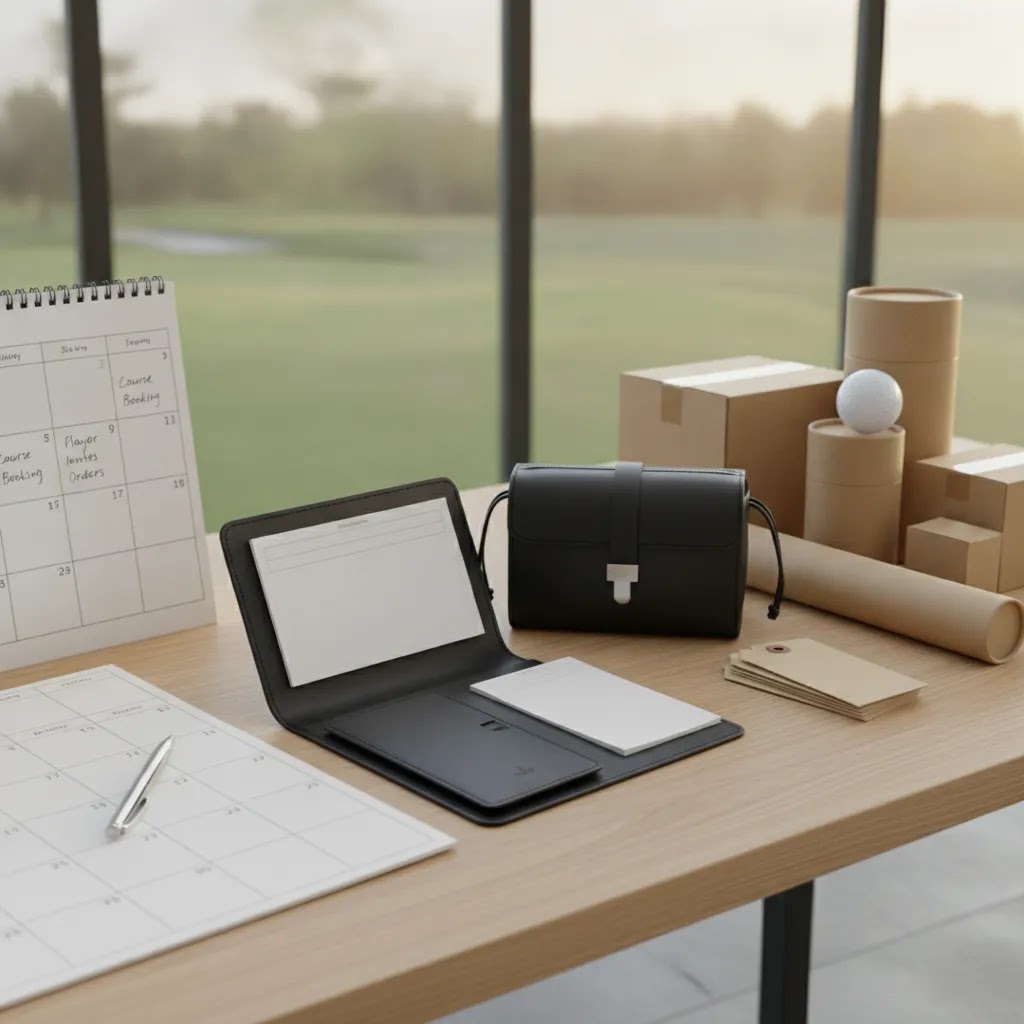
Most ordering stress comes from misunderstanding the sequence. Bulk custom golf gear is usually predictable if you treat it like a workflow with approvals, production windows, and a receiving buffer, not a single checkout moment.
A typical bulk order sequence
- Choose the items and confirm the key specs that affect branding: material, color, imprint method, and decoration area.
- Submit artwork in the requested format and confirm brand rules, such as preferred logo versions and minimum clear space.
- Receive a proof, review it at the actual imprint size, and request revisions if needed.
- Approve the proof in writing. Production typically does not start until approval is received.
- Production begins, then items go through basic quality checks and packing.
- Shipping and transit, then receiving. Build in time for counting, sorting, and assembling player packs.
What “proof” can mean, and why it matters
A proof can be a digital mockup, a production-ready layout, or a pre-production sample. Digital proofs are common and usually sufficient for simple logo placement, but they do not always show how materials and finishes will feel in person. If your event is high-visibility, or if the item is premium and the branding needs to look perfect, paying for a physical pre-production sample may be worth it. That is especially true when the logo includes fine lines, small text, or tight spacing.
Physical samples can add time and cost, so they are a better fit for sponsor gifts, executive kits, or repeat annual events where you can reuse the approved design later.
Timing buffers and risk notes that affect real delivery
Even strong vendors can run into delays if approvals slip or the order changes late. These issues are common enough that you should plan for them:
- Rush orders: rushing can work, but it may limit revision cycles, increase freight costs, or reduce your buffer for issues found on arrival.
- Split shipments: sending part of the order early can reduce risk, but it can add shipping cost and increase the chance of mismatched lots if items are produced in separate runs.
- Last-minute logo changes: changes after proof approval often restart parts of the process. That can create new setup work, new proofing, and a new production slot.
- Receiving buffer: even if delivery is on time, you still need time to inspect, count, and assemble. If your event is important, build in days, not hours.
The safest play is boring: finalize the logo early, keep decoration clean, approve proofs quickly, and schedule delivery with enough margin that a small delay does not become an event-day crisis.
Sample product directions
You do not need a giant catalog to build a strong event package. You need products that fit the event level.
For player gift bags
Lower-cost staples often work best here. Tees, hats, and practical small accessories give you reach without overloading the budget. If you are deciding between broader options, Custom Golf Accessories can help frame the wider category.
For sponsor or VIP gifts
Leather scorecard holders, custom headcovers, belts, or premium valuables pouches usually create a more lasting impression. Current examples include made-in-USA leather headcovers at $160, scorecard holders from $90 to $125, and luxury belts from $165 upward.
For team identity and repeat use
Belts, hats, and matching accessories often make the most sense because they support consistent branding over time. One practical advantage of made-to-order belts is fit flexibility. Ace of Clubs currently offers multiple handcrafted belt lines with selectable sizing, widths, stitch details, and buckle options, which is helpful when your team order includes varied recipients and you want a polished result without forcing standard off-the-rack sizing.
For statement-level awards
Custom leather bags or high-end exotic leather items can work for champions, board members, major sponsors, or milestone recognition. These are not typical wholesale golf accessories in the low-cost sense, but they can be effective when a small number of gifts carries outsized relationship value.
Final buying checklist
- Confirm who the items are for: players, sponsors, employees, winners, or VIP clients
- Choose products based on actual golf use, not just shelf appeal
- Make sure your logo fits the item size and material
- Ask what customization is included and what costs extra
- Verify minimum quantities and whether mixed-item orders are possible
- Build in time for proofs, production, shipping, and any corrections
- Separate your order into participant and premium tiers if needed
- Check return, cancellation, and approval policies before paying
- Request physical samples or close-up proof images when quality is critical
- Confirm final quantities only after attendance and sponsorship counts stabilize
Frequently Asked Questions
What are the best custom golf accessories bulk buyers should start with?
Start with items golfers already use during a round or while traveling to play. Tees, hats, scorecard holders, headcovers, and belts usually outperform novelty items because they have a clear purpose. The best first choice depends on your event budget and audience. For a broad player field, lower-cost practical items often work well. For sponsor gifts or executive outings, leather goods or premium accessories may create a stronger impression. A good buying process begins with the role of the item, then the logo treatment, then price.
How far in advance should I order custom golf promotional items?
Earlier is usually better, especially for made-to-order or personalized products. Bulk custom golf gear may require artwork preparation, proof approval, production scheduling, and shipping. If your event date cannot move, build in margin for delays or revisions. Buyers often get into trouble when they count only production days and forget transit time. Custom materials, multiple logo placements, or premium handcrafted products can take longer than basic stock items. If the event is important, aim for a timeline that gives you room to approve samples without rushing.
Are premium leather accessories worth it for corporate golf events?
They can be, but only when the audience and objective justify them. Premium leather accessories tend to work best for sponsor thank-yous, board gifts, executive client outings, team awards, or member-guest packages where perceived value matters. They are usually not the right use of budget for every participant in a large scramble. The better question is not whether premium is worth it in general. It is whether the gift needs to feel memorable, durable, and brand-reflective enough to survive well beyond the event day.
What is the difference between wholesale golf accessories and made-to-order custom gear?
Wholesale golf accessories often imply larger quantities, simpler customization, and more standardized products. Made-to-order custom gear usually gives you more control over material, size, finish, and branding details, but may require more time and budget. For example, a standard promotional item may accept a logo in one position. A made-to-order leather accessory may let you choose colors, stitching, buckle hardware, or monogram options. Neither route is automatically better. The right choice depends on event scale, branding goals, and how premium the final product needs to feel.
How do I choose between custom golf giveaways and higher-end gifts?
Split the audience first. If everyone receives the same item, you may end up overspending on the field or underserving top sponsors. Many successful event buyers create tiers. Participants get practical branded items, while sponsors, winners, or VIP guests receive a stronger gift. This keeps the budget aligned with the relationship value of each group. Lower-cost giveaways help visibility and participation. Higher-end gifts help retention, gratitude, and brand memory. The smartest orders often combine both instead of forcing one item to serve every purpose.
What decoration method is best for custom logo golf accessories?
The best method depends on the product material and your logo style. Embroidery often works well on hats and some headcovers. Laser engraving tends to suit leather goods such as scorecard holders, wallets, and certain premium accessories where a subtle look feels more refined. Bright, complex logos may need different treatment than a simple wordmark or monogram. Ask whether your design will remain readable at the actual imprint size. A decoration method can look impressive in concept but weak in practice if the logo is too detailed for the product.
What products make the strongest golf tournament gifts custom ordered for sponsors?
Items with real course use and a premium finish usually perform best. Scorecard holders, custom headcovers, handcrafted belts, and premium golf bags all fit sponsor gifting more naturally than low-cost novelty products. The exact choice depends on budget, recipient profile, and whether you want a broad thank-you item or a standout award. If the sponsor relationship is high value, choose something that feels durable and thoughtfully branded. Gifts that stay in a bag or on the course create better long-term visibility than one-day-use items.
Should I order one large batch or smaller staged orders?
That depends on certainty. One large batch may lower administrative complexity and sometimes improve pricing, but it can also create waste if attendee counts shift or sponsor commitments change. Smaller staged orders may reduce risk, though they can complicate timelines and consistency. If your event is annual and predictable, locking in a standard mix may make sense. If you are testing a new format or guest list, a more cautious phased approach can be smarter. Always ask whether reorders will match the original materials and decoration closely.
Can bulk custom golf gear still feel high end at mid-range budgets?
Yes, if you focus on product selection and restraint. Mid-range budgets often stretch further when you choose one well-made practical item rather than several average ones. Leather scorecard holders, cleanly branded hats, or custom headcovers can feel elevated without reaching luxury-bag pricing. Presentation also helps. Matching colors, consistent logo placement, and a tight product mix usually feel more premium than a scattered assortment. Buyers often get better results from thoughtful curation than from adding more pieces in pursuit of quantity.
Where can I compare options for branded golf accessories more carefully?
You can start by reviewing broader category pages like Golf Belts or comparing adjacent product types within the custom golf hub. One practical approach is to shortlist by use case first, such as participant gift, sponsor gift, or team uniform accessory, and then compare materials, customization limits, and price tiers. Ace of Clubs is one resource that shows a useful spread of handcrafted scorecard holders, headcovers, belts, hats, and custom bags, which can help you judge how different tiers change the final feel.
What is the minimum order quantity for custom golf accessories in bulk?
Minimum order quantity depends on the item and the decoration method. Some accessories are produced with true bulk minimums tied to packaging or production runs. Other products allow smaller quantities but may add setup charges or higher unit pricing that effectively replaces the MOQ with a cost tradeoff. If you are ordering multiple designs, colors, or personalization variations, ask whether the minimum applies per item, per design, or per color.
Can I order custom golf accessories in bulk with no minimum?
Sometimes, yes. “No minimum” programs typically exist for certain items and decoration methods, but the effective cost per unit is often higher at low quantities because setup, proofing, or decoration labor is spread across fewer pieces. If you are ordering for a small group, request a quote that separates unit price from setup, proofing, and shipping so you can see the true all-in cost before you commit.
What are the most popular personalized golf accessories for tournaments (ball markers, divot tools, towels)?
Ball markers, divot tools, and towels are popular because they are used on the course and fit cleanly into player packs. Ball markers are easy to distribute and can be subtle or more gift-like depending on size. Divot tools are high-utility and feel purpose-built for golfers. Towels offer strong visibility and repeat use, especially if the fabric quality and branding are handled with restraint. Many tournaments add tees or pencils as low-cost supporting items alongside one stronger centerpiece gift.
How long does it take to make and ship bulk personalized golf accessories?
Timing depends on the product type, customization method, and how quickly proofs are approved. A typical order includes artwork submission, proof review, approval, production, and transit. If you request physical samples, multiple rounds of revisions, individual personalization, or split shipments, the timeline can extend. Rush options may be available, but they can increase cost and reduce the buffer for corrections. If the event date is fixed, plan for a receiving window so you can inspect and assemble items before the first tee time.
Key Takeaways
- For custom golf accessories bulk orders, utility usually matters more than novelty.
- Material and decoration method shape perceived quality as much as the logo itself.
- Mid-range leather and performance accessories often offer the best balance for corporate events.
- Tiered gifting helps you serve players, sponsors, and VIPs without wasting budget.
- Timeline discipline is essential, especially for made-to-order and personalized products.
Conclusion
Buying custom golf accessories bulk is less about finding one “best” item and more about matching the right item to the right audience, event tone, and timeline. A charity scramble, executive client outing, and sales team tournament may all need branded golf accessories, but they should not be built the same way. The smartest orders are usually the ones that stay practical, keep branding clean, and reserve premium spend for the people who will notice it most.
If you are narrowing your options now, compare products by actual use, material, customization limits, and delivery timing before you compare them by appearance alone. For a broader starting point, review Corporate Golf Accessories, explore the wider Custom Golf Accessories topic, or browse the Personalized Golf Accessories pillar to compare gift directions before placing a large order.
Product availability, customization options, production timing, and pricing may change. Always confirm current specifications, artwork requirements, lead times, shipping estimates, and order policies before purchasing. Bulk and made-to-order items may have approval requirements, minimum quantities, or limited return options. Branded golf accessories may improve presentation, organization, and gifting value, but they do not guarantee event outcomes, sponsor retention, or player satisfaction.


