


If you are researching custom golf clubs cost, a realistic starting point is $100 to $400 for a fitting session, about $150 to $500 for a single custom club, and roughly $1,500 to $4,500+ for a full custom set depending on brand, shafts, and build complexity. That range is wide for a reason. Some golfers only need a driver or putter adjustment, while others benefit from a full bag rebuild. The bigger question is not just what custom clubs cost, but whether paying more actually improves fit, consistency, and long-term value for your game. This guide focuses on cost by fitting level, what changes the final bill, and where spending more may or may not pay off. If you also want a broader look at personalized gear beyond clubs, see Personalized Golf Accessories.
The short answer on custom golf club pricing
Most golfers end up in one of three spending bands. Entry-level customization usually means a basic fitting and one or two spec changes, often landing in the $250 to $900 range for a single club purchase or partial setup. Mid-range custom buying, where you choose upgraded shafts, grip preferences, loft or lie adjustments, and more precise build specs, usually lands between $1,500 and $3,000 for a meaningful set makeup. Premium custom builds with high-end aftermarket shafts, specialty heads, detailed gapping work, or tour-style build tolerances can move past $4,000.
The key is matching the level of fitting to your skill, frequency of play, and existing equipment gaps. A golfer struggling with driver launch may get excellent value from one focused fitting. A beginner with inconsistent contact may not see the same return from a top-tier full-bag build right away.
Typical cost ranges by level
| Level | Typical Price Range | What’s Usually Included |
|---|---|---|
| Basic fitting only | $100 to $250 | Length, lie, shaft flex, simple recommendations, limited test matrix |
| Advanced single-club fitting | $150 to $400 | Launch monitor testing, multiple heads and shafts, spec optimization for one club category |
| Custom driver or putter purchase | $150 to $500+ | Club plus custom specs, with price depending heavily on shaft and head choice |
| Custom iron set | $900 to $2,500+ | Set build, loft and lie tuning, shaft and grip selection, sometimes follow-up tweaks |
| Full bag fitting and build | $1,500 to $4,500+ | Driver through putter evaluation, gapping, shaft matrix, set makeup planning, complete purchase |
| Premium or exotic build path | $4,500 to $7,000+ | Top-tier heads, premium shafts, exact build tolerances, specialty wedges, premium accessories |
What a club fitting typically includes (and what it does not)
Fitting fees make more sense when you know what you are actually paying for. Most fittings fall into a few common formats, and the experience can vary a lot even if two shops post the same price.
Common fitting formats you will see
Static measurements are the lightest version. That usually means height, wrist-to-floor, and grip sizing, then a starting recommendation for length, lie, and flex. It can be helpful for new golfers, but it is not a replacement for seeing ball flight and strike tendencies.
Dynamic testing is what most golfers mean by a true fitting. You hit shots while the fitter collects data, then you test different heads and shafts to see what changes launch, spin, dispersion, and contact quality. Dynamic sessions can be indoor, outdoor, or both. Indoor bays are convenient and typically use a launch monitor, while outdoor fittings can help you feel turf interaction and real ball flight. Either can work well, but ask what technology is used and how results are validated.
Single category fittings focus on one club type, like driver, irons, wedges, or putter. Full bag fittings cover the entire set makeup. Full bag sessions are usually more expensive not just because they take longer, but because gapping and role definition become part of the work.
Deliverables you should expect for the fee
A quality fitting typically ends with a clear spec sheet. That may include head model, loft, shaft model and flex, shaft length, lie angle, swing weight targets, grip model and size, and any tipping or build notes if relevant. For irons and wedges, you should also expect gapping notes, such as whether your set makeup should change or whether lofts should be adjusted to avoid yardage overlap.
Some fitters also provide a data summary, such as launch monitor comparisons between your gamer club and the recommended build. If you are paying for an advanced session, it is reasonable to ask whether your results will be sent to you afterward, not just discussed verbally.
What is not always included: the build itself, follow-up adjustments, or free tweaks after you receive the clubs. Some locations apply fitting fees as credits toward a purchase, while others keep the fitting fee separate. Neither approach is automatically better, but you should know the policy before you start.
Questions to ask before you pay for a fitting
- How long is the session, and is that time dedicated to me or shared?
- Is the fitting brand-neutral, and how many brands and head models are available for my category?
- How large is the shaft matrix, and does it include real aftermarket shafts or only a few stock options?
- Do you recommend based on data only, or do you also factor feel, strike location, and course tendencies?
- What deliverables will I receive: spec sheet, gapping plan, and a copy of the session data?
- Is any portion of the fitting fee credited toward a club purchase, and under what conditions?
- Are follow-up loft and lie checks included after a break-in period, and if so, how many visits?
- If clubs are ordered or built through you, what is the policy if the delivered specs do not match the recommended specs?
- What is the return or exchange policy for custom-ordered clubs, and are there restocking fees?
What pushes the price up or down
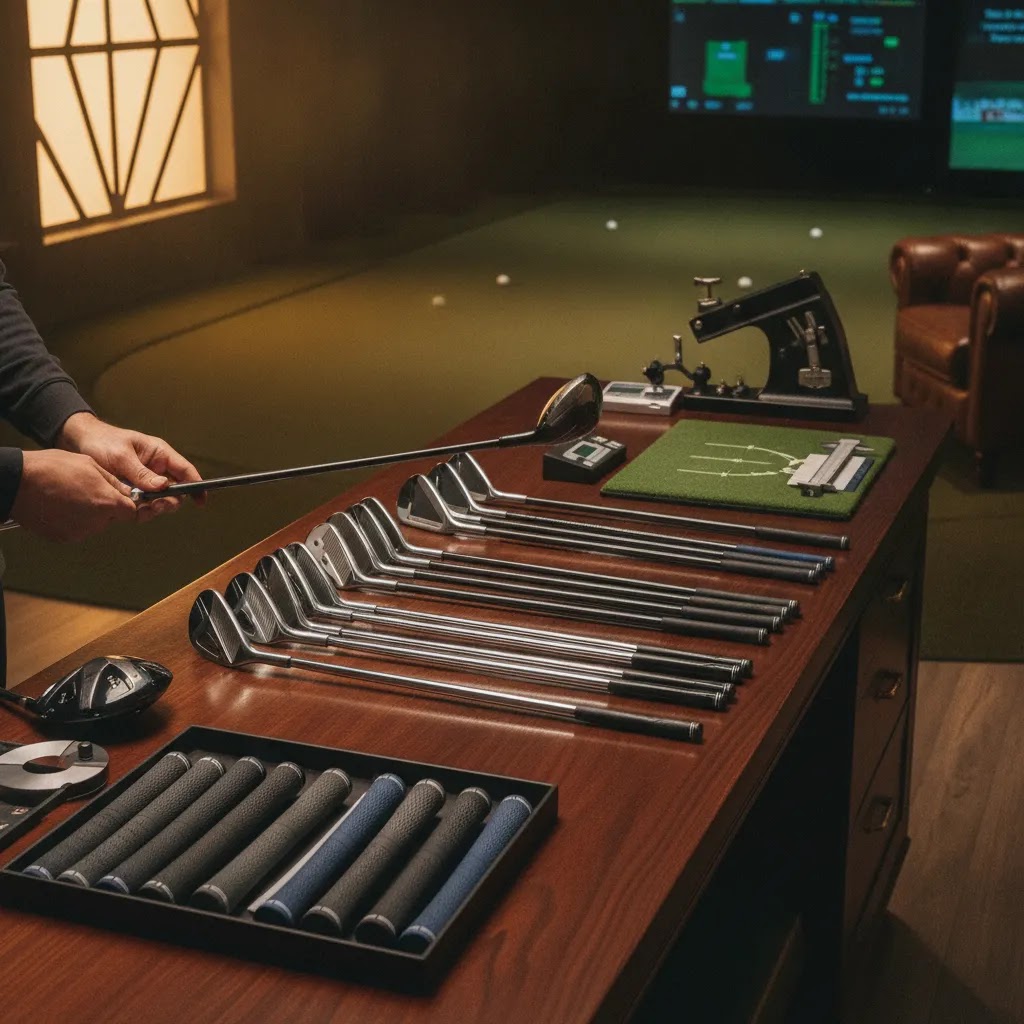
Fitting scope
A one-hour iron fitting costs far less than a full bag session. The more clubs you test, the more shafts you compare, and the more data the fitter collects, the higher the cost usually goes. Full bag fittings also tend to surface more purchase recommendations, which raises the total project price.
Shaft upgrades
This is often the biggest swing factor. Stock shafts may keep pricing reasonable, while premium aftermarket options can add hundreds of dollars to a single driver or well over $1,000 to a full set. If you are asking why two custom quotes are far apart, shafts are often the first place to look.
Head category and brand positioning
Game-improvement irons, player’s irons, forged heads, and specialty wedges do not all sit in the same pricing tier. Premium brands and niche builders may charge more for head technology, finish quality, or tighter production standards. That does not automatically mean better value for every golfer.
Build tolerance and labor
Some golfers are happy with standard factory tolerances. Others want tighter control over swing weight, loft, lie, frequency matching, or hand-built assembly. More labor and tighter tolerances usually raise the cost, especially at premium fitting studios or boutique builders.
Follow-up adjustments
Some fitting programs include loft and lie checks, gap reviews, or minor post-delivery adjustments. Others charge separately. A cheaper upfront fitting may not remain cheaper if you later pay for added tuning work.
Location and fitter reputation
Urban studio pricing and highly sought-after fitters often run higher. In many cases, you are paying for both equipment matrix depth and fitter experience. That may be worthwhile if your swing is repeatable enough to benefit from fine margins.
Custom golf club builders vs local fitters: where “custom” actually happens
Golfers often say they are buying “custom clubs,” but that can mean very different things depending on where you fit, where you order, and who assembles the clubs. Understanding the path matters because it can change both cost and risk.
Ordering “custom” from an OEM
This is the most common route. You get fit into a head and shaft option that the manufacturer offers, then the clubs are built through the brand’s standard custom program. It is often the simplest ordering process and can be cost-effective, but you are typically working within a defined menu of shafts, grips, and build options.
Buying through a big-box fitting bay
Big retail stores can be a convenient place to get baseline fitting help. The tradeoff is that matrix depth can vary by location, and “custom” may be limited to standard catalog options. Some stores have strong fitters and good equipment, others are more hit-or-miss depending on staffing and how busy the bay is.
Dedicated fitting studios
Independent studios and premium fitters often carry broader head and shaft matrices, and they may be more likely to build a complete gapping plan across the bag. The fitting fee can be higher, but the value can increase if you need real comparisons across multiple shaft weights and profiles, or if your miss patterns are specific and repeatable.
Local builders and true custom assembly
A dedicated builder is where “custom” can become more literal. Builders may measure and verify key specs during assembly, such as length, swing weight, loft, lie, and in some cases shaft frequency. They may also offer a wider list of aftermarket shafts and grips, plus the ability to fine-tune a build after you have played it.
This path can cost more because you are paying for labor, parts sourcing, and verification. It can also reduce the chance of living with a set that is close, but not quite right. The outcome still depends on the builder’s skill and process, so it is reasonable to ask what they measure, what tolerances they target, and whether they document the final specs.
How the path affects total cost and risk
Two golfers can order the same head and shaft and still get different results if build tolerances are loose or if a club arrives out of spec. A common cost surprise is paying for a rebuild or tweak after delivery, such as a loft and lie correction, a swing weight change, or a shaft swap that was not clearly priced in the original quote.
Mis-build risk is not limited to any one channel. It is simply more noticeable when you are paying premium pricing. If you care about tight tolerances, ask who assembles the clubs, whether final specs are checked, and what happens if a club arrives outside the target range.
Who each option is typically best for
Beginners often do well with a simpler fitting path that prioritizes basics like length, flex, and grip size. Improving players often benefit from a more detailed dynamic fitting for the categories they hit the most, especially irons and driver. Low handicaps, or anyone sensitive to feel and dispersion, are more likely to appreciate verified builds, consistent swing weights, and tighter spec control across the set.
Price breakdown by club category
Not every club deserves the same budget. If your goal is smart spending, prioritize the categories where poor fit costs you the most strokes or the most consistency.
Driver
Expect around $150 to $400 for a driver fitting and roughly $400 to $1,200+ for the club depending on shaft choice. This category can produce noticeable gains because launch, spin, and face delivery react strongly to fit. It is also one of the easiest places to overspend on premium shafts that may offer only marginal benefit.
Irons
Custom iron fittings often cost $150 to $350, while a custom set may range from $900 to $2,500 or more. For many golfers, irons are where fitting delivers the most practical value because lie angle, shaft weight, and gapping affect nearly every round. If your strike pattern is fairly consistent, iron fitting often has one of the clearest return profiles.
Wedges
Wedge fittings and builds often land between $150 and $600+ for one or more clubs. Cost depends on grind, loft setup, finish, and shaft decisions. Players with a developed short game may benefit more here than casual golfers who have not yet built consistent delivery around the greens.
Putter
Putter fitting costs are often lower than full-bag sessions, but the value can be surprisingly high. Loft, lie, length, toe hang, and visual preference all matter. On the accessory side, Ace of Clubs offers premium putter details such as the Black Leather Putter Grip at $50 and handcrafted alligator putter grips like the Black Alligator Putter Grip at $200. Those are not substitutes for fitting, but they show how fast premium customization can raise total spend.
Full bag
A full bag fitting is the most expensive route, but it may make sense if your clubs were bought piecemeal over many years and the set no longer works together. The value comes from proper gapping and role definition, not just from owning more expensive gear.
Typical pricing by retailer type (including big-box fitting costs)

Many golfers search for fitting prices by store name, but the more useful approach is to understand the pricing pattern by retailer type. Fees, credits, and what is included vary enough that comparing two quotes can be misleading unless you break the totals apart.
Big-box retail stores
A typical big-box fitting fee is often in the $50 to $150 range for a single category and roughly $100 to $300 for a larger multi-club session, though pricing can run higher in certain markets or for higher-end experiences. Some locations apply a portion of the fee toward a purchase, while others treat it as a separate service.
The most common reasons big-box costs climb: you add more categories than planned, you move from stock shafts to paid upgrades, or you pay separately for follow-up work like loft and lie checks, regrips, or additional evaluation time.
Independent fitters and dedicated studios
Independent studios often price a single category fitting around $150 to $400, with full bag sessions commonly higher. The upside is usually more time, a larger test matrix, and a fitter who does this work as the core business rather than as one service inside a larger retail operation.
Credit policies can vary. Some studios apply part of the fitting fee toward clubs if you buy through them, and others keep fitting and purchasing separate to reduce sales pressure. Neither model guarantees better results, so focus on process and deliverables.
Premium fitting brands and tour-level experiences
Premium fitting experiences can run several hundred dollars, and sometimes more, especially for full bag sessions. You are often paying for time, depth of inventory, data collection, and higher-touch follow-up support. This can be a good match for golfers who have a consistent swing and care about tight dispersion and gapping details.
Add-ons that change the true all-in number
Regardless of retailer type, many “all-in” totals change after the fitting. Common add-ons include: shipping on custom orders, grip and build upcharges, separate charges for loft and lie checks after delivery, and rebuild costs if you swap shafts later. If you are ordering from multiple sources, you may also pay for verification work to confirm specs match the fitting recommendations.
How to compare quotes apples-to-apples
Two quotes can look similar but represent different totals. A practical way to compare is to list four numbers side-by-side: fitting fee, club head cost, shaft and grip upcharges, and follow-up adjustment costs. That structure helps you avoid choosing a cheaper fitting that becomes expensive after you add the parts and post-delivery work you actually need.
Does the investment actually pay off?
Custom golf clubs may be worth it if your swing is repeatable enough for the data to mean something, you play often enough to benefit from the changes, and your current clubs clearly fight your delivery. That could mean irons that are the wrong length, a driver that spins too much, or wedges that create yardage overlap.
The investment usually pays off best for three groups. First, regular golfers who play or practice enough to notice ball-flight and strike differences. Second, improving players whose swing patterns are becoming stable. Third, golfers replacing old clubs and planning to keep the next set for years.
It may pay off less for true beginners, golfers returning from a long layoff, or players whose swing changes dramatically from week to week. In those cases, a lighter fitting session or one key club upgrade may be a smarter place to start than a premium full-set order.
Pros and Cons
Strengths
- Can improve fit for launch, spin, gapping, and strike consistency
- Often helps golfers avoid wasting money on the wrong off-the-rack setup
- May increase long-term value if you keep the clubs for several seasons
- Lets you prioritize spending by club category instead of buying a full set blindly
- Can reveal that only one or two clubs need replacing, which may save money
Considerations
- Costs rise quickly once premium shafts and build options enter the quote
- Beginners may not capture full value from an expensive high-detail fitting
- Results depend heavily on fitter quality and the golfer’s swing repeatability
- Some gains may be incremental rather than dramatic, especially for better players already using decent equipment
How to keep custom costs under control
Start by fitting the most important problem first. If your driver is costing distance and penalties, fit the driver. If your irons produce inconsistent contact and direction, start there. You do not need a full-bag project every time.
Ask for quotes with both stock and upgraded shaft options. This helps you see whether the expensive shaft is producing enough measurable benefit to justify the added cost. Many golfers find that a moderate upgrade captures most of the value.
Separate performance needs from aesthetic wants. A custom build can include premium finishes, premium accessories, and upgraded details, but those should be conscious choices. Ace of Clubs, for example, focuses heavily on premium made-in-USA accessories, from custom wood headcovers like the Onyx Leather Custom Wood Headcover at $160 to the Custom Leather Stand Golf Bag at $1,000. Those products can elevate the overall setup, but they belong in a separate style-and-protection budget from the fitting decision itself.
One more tip: ask whether follow-up loft, lie, or gap checks are included. A slightly higher fitting fee with included adjustments may offer better value than a lower entry price with add-on charges later.
Ace of Clubs options to compare alongside your club budget


Ace of Clubs is most useful here as a premium gear benchmark once you have decided how much of your budget should go toward performance fitting versus presentation, protection, and personalization. The brand’s catalog includes handcrafted, made-in-USA accessories across headcovers, scorecard holders, bags, grips, and belts. If you are building a complete premium setup after a fitting, explore the broader Custom Personalized Golf category or compare functional add-ons in Golf Accessories. Soft next step: use those resources to map which upgrades improve play and which mainly improve ownership experience.
Frequently Asked Questions
How much are custom golf clubs for a full set?
A full custom set commonly costs about $1,500 to $4,500+, though premium builds can exceed that. The final number depends on how many clubs you replace, whether you choose stock or upgraded shafts, and how detailed the build process is. Full-bag fitting fees may also be separate from the club purchase.
How much does custom fitting cost for golf clubs?
Basic fittings often start around $100 to $250. More advanced single-club fittings usually fall in the $150 to $400 range, while full-bag sessions can go higher. Some fitters credit part of that fee toward a purchase, but many do not, so it is smart to verify the policy before booking.
Are custom golf clubs worth it for beginners?
They may be, but usually at a lighter level. Beginners often benefit more from sensible length, flex, grip size, and basic setup guidance than from a top-tier premium build. If your swing is still changing quickly, a modest fitting or a single-club focus may be a better value than a full custom bag.
What part of custom golf club pricing adds the most cost?
Premium shafts are often the biggest price driver. They can add substantial cost to a driver, iron set, or full bag. Build labor, tighter tolerances, and high-end club heads also raise pricing, but shaft upgrades are usually the first place where quotes spread apart most dramatically.
Can custom fitting save money in the long run?
Yes, it can, especially if it prevents buying the wrong clubs or reduces trial-and-error spending. A focused fitting may help you replace only the clubs that truly need attention. The savings are less certain if you frequently change equipment anyway or if your swing changes enough to outgrow the specs quickly.
Should I fit irons or driver first?
Start with the part of the bag causing the biggest performance problem. Many golfers get strong value from irons because they hit them often and need reliable contact and gapping. Others gain more from a driver fitting if launch and spin are clearly costing distance or accuracy off the tee.
Do custom clubs guarantee lower scores?
No. Better fit may improve consistency, comfort, and ball flight, but it does not guarantee a specific scoring outcome. Results depend on skill, practice, course management, and how repeatable your swing is. Fitting should be viewed as a performance support tool, not a promise of dramatic improvement.
Is it cheaper to customize existing clubs?
Sometimes. Adjusting loft, lie, grip size, or shaft setup on current clubs can be more affordable than replacing everything. That said, once major shaft changes or multiple rebuild steps are involved, modifying older clubs may become less attractive than buying new equipment that better fits from the start.
What is a reasonable budget for a serious amateur?
For many serious amateurs, a practical range is about $1,500 to $3,000 if they are updating key categories without going fully premium on every shaft and finish choice. That level often balances solid fitting value with responsible spending, especially for golfers who plan to keep the clubs for several seasons.
How much do custom made golf clubs cost?
Custom made golf clubs commonly fall into two buckets. If you mean standard manufacturer “custom order” clubs built to chosen specs, many golfers land around $150 to $500+ for a single club and roughly $1,500 to $4,500+ for a full set depending on shafts and build options. If you mean true custom builds that include broader aftermarket shaft access and tighter build verification, total costs can climb, especially for full bag projects, and premium builds can move well beyond $4,000.
What is the 70/30 rule in golf?
The “70/30 rule” is usually used as a rule-of-thumb practice split. Many coaches describe putting and short game as the area where golfers should spend roughly 70% of practice time, with about 30% on full swing. It is not an official rule, and it may not fit every player, but it reflects the idea that scoring is heavily influenced by shots inside about 100 yards and putting.
Does Dick’s customize golf clubs?
Many large sporting goods retailers offer some level of club customization, often through in-store fitting bays and manufacturer custom-order programs. The exact services can vary by location, so the smart move is to call ahead and ask what categories they fit, what the fitting fee is, whether any fee is credited toward a purchase, and what shaft and head options are available. If you want tighter build verification, ask who assembles the clubs and whether final specs are checked.
Are custom golf clubs worth it?
They can be worth it if the fitting process meaningfully improves how the club interacts with your swing, such as better launch and spin in the driver, more consistent strike and start line in irons, or cleaner gapping across the bag. The value is usually higher when you play enough to benefit, your swing is repeatable, and you plan to keep the clubs for multiple seasons. If your swing is changing rapidly, a smaller-scope fitting or focusing on one problem category is often the lower-risk way to start.
Key Takeaways
- Custom golf clubs cost about $100 to $400 for fitting, $150 to $500+ for a single club, and $1,500 to $4,500+ for a full set.
- Shaft upgrades, fitting scope, and build tolerance usually drive the biggest price differences.
- Iron and driver fittings often provide the clearest value for regular golfers.
- Premium custom work pays off best when your swing is repeatable and you plan to keep the clubs for years.
- Budget separately for accessories, headcovers, bags, and personalization so performance decisions stay clear.
Conclusion
The real answer to custom golf clubs cost is not one number. It is a decision tree. A focused fitting for one problem club may be a smart $200 to $600 move. A full premium build can run several thousand dollars and still be justified if the fit is precise, the clubs stay in the bag for years, and the changes match how you actually play. Start with your biggest equipment weakness, compare upgrade paths carefully, and keep style spending separate from performance spending. If you want to explore premium add-ons after the fitting side is settled, Ace of Clubs offers a strong place to compare handcrafted golf accessories, custom headcovers, bags, and finishing details that complement a serious setup.
Pricing ranges in this article are general market estimates intended for educational purposes and may change over time. Product prices referenced for Ace of Clubs items reflect currently available site data at the time of writing and may change without notice. Custom fitting and custom-built golf equipment may improve fit and consistency, but they do not guarantee performance gains, lower scores, or specific outcomes. Always confirm current specifications, policies, and pricing with the seller or fitter before purchase.


