


Do you need a separate cover for your putter if your woods already have headcovers? Usually, yes. A putter cover and a standard golf headcover share the same broad purpose, which is reducing contact damage in your bag, but they protect different club shapes in different ways. Your putter has a compact face, sole, alignment features, and often a specialty finish that can be exposed each time you walk, ride, or travel with your clubs. Woods and hybrids have larger, more vulnerable heads that need their own shape-specific protection. This guide explains the practical difference so you can decide whether both belong in your bag. For a broader look at available designs, see our guide to Golf Headcovers.
Quick Verdict
Choose a putter cover if you want to protect the putter you use on every hole, especially if it has a premium finish, milled face, painted alignment marks, or a shape that can knock against neighboring clubs. Use standard headcovers for your driver, fairway woods, and hybrids because their larger heads and shafts need protection from bag chatter. Most golfers benefit from both because one does not replace the other.
Side-by-Side Protection Comparison
A putter cover is a specialized type of headcover. In casual golf conversation, though, “headcover” often means the cover used on a driver, fairway wood, or hybrid. The distinction matters because a loose wood cover rarely fits a putter correctly, while a putter cover cannot protect the broad crown and long hosel area of a driver.
| Putter Cover | Wood, Fairway, or Hybrid Headcover | |
|---|---|---|
| Primary job | Protects a putter head from contact with clubs, zippers, carts, and bag hardware. | Protects the larger head of a driver, fairway wood, or hybrid from club-to-club contact. |
| Typical fit | Built around blade, mid-mallet, or mallet putter shapes. | Built around a larger wood or hybrid head and longer hosel profile. |
| How often it is handled | Usually removed and replaced repeatedly during a round. | Usually removed only when that specific club is selected. |
| Most common fit mistake | Buying a blade cover for a mallet or overlooking shaft placement. | Using a cover too loose for a hybrid or too tight for an oversized driver head. |
| Best for | Golfers protecting a frequently used putter and keeping the bag organized around the greens. | Golfers protecting woods and hybrids during transport, cart rides, and storage. |
| Worst for | Covering drivers, fairway woods, or hybrids. | Covering a putter securely without excess bulk or poor fit. |
What Each Cover Protects
The main difference between a putter cover and headcover is not just size. It is the kind of contact each club is likely to experience.
Putter cover position
A putter sits near the top of the bag and often shares space with wedges, irons, a rangefinder, towels, and cart straps. Its face and topline can come into contact with harder metal clubheads during a walk or rough cart ride. A properly fitted putter cover may reduce routine scuffing on the face, sole, edges, and finish.
Putter covers are also shaped for access. You take them off before putting and put them back on afterward, so their closure and fit should feel predictable rather than fussy. A cover that is too tight can become irritating over 18 holes. One that is too loose may slide off in the bag.
Standard headcover position
Driver, fairway wood, and hybrid heads have larger painted or finished surfaces that can strike other clubs while the bag moves. Their shafts and hosels also create a different silhouette than a putter. A standard headcover surrounds that broader shape and separates it from other clubs.
The protection is especially useful during car travel, walking rounds, cart rides, and storage. It does not make a club damage-proof, but it creates a soft barrier between clubheads that would otherwise knock together.
Winner on this dimension: Both. A putter cover protects a putter’s specific shape and frequently handled surfaces, while standard headcovers protect the larger heads of woods and hybrids. They solve different problems.
Fit and Daily Use

Fit determines whether a cover is useful or merely decorative. The most attractive cover can become a poor purchase if it does not match the club it is meant to protect.
Putter cover position
Picture the putter resting on the green before you decide on a cover. Blades carve a sleek, elongated silhouette, while mallets command more presence with flared wings, deep cavity backs, or bold heel-to-toe curves. Don't overlook where the shaft meets the head, either, a center-shafted design calls for a different opening and contour than the classic heel-shafted build. Precision here ensures your cover fits like it was crafted for your club alone.
If you play a larger putter, our mallet putter cover guide can help you identify the fit details that deserve attention. Golfers using a traditional blade may prefer the narrower profiles discussed in our Putter Cover Guide.
Standard headcover position
Wood covers should match the club category first. Driver covers need enough room for the largest head in the bag. Fairway and hybrid covers should stay in place without leaving excess material that can catch on neighboring clubs. Number tags can help identify clubs quickly, but correct physical fit remains more important than labeling.
Winner on this dimension: Putter cover. A putter cover requires more precise shape matching because blade, mallet, and center-shafted designs can vary substantially. Standard wood covers still need proper sizing, but their fit range is often less specialized.
Measuring Your Putter for the Right Cover
Before purchasing, measure the head from heel to toe, then check its front-to-back depth at the widest point. Look beyond the main body too. Rear wings, a wide flange, raised alignment features, and a center shaft can all require more room than a standard blade profile provides.
Blade putters usually need a narrow, elongated cover. Mid-mallets often require more depth, while mallets may need a broad profile that fully clears the rear of the head. Center-shafted putters deserve extra attention because the shaft opening must align naturally rather than forcing the closure around the shaft.
A good fit closes with light pressure and covers the head without leaving exposed corners. A strained closure, visible edges, or a cover that slips off while you lift or transport the bag are practical signs that the profile is not right. Check the product dimensions against your measurements before ordering, particularly for an oversized or uniquely shaped putter.
Do You Need Both in Your Golf Bag?
If your bag includes a putter plus woods or hybrids, the practical answer is generally yes. Both cover types address contact risks that occur in different parts of the bag.
You may prioritize a putter cover first if your putter is the only club without one, you carry a premium putter, or you notice marks from wedges and irons. You may prioritize standard headcovers first if you routinely transport your bag, play from a cart, or carry a driver and multiple fairway woods with painted crowns.
There are a few situations where you may not need a full set immediately. A golfer who uses only irons and a putter needs no driver or fairway wood cover. A player who owns a driver but leaves a rarely used fairway wood at home may only need a driver cover and putter cover. The goal is not to buy a cover for every club by default. It is to protect the clubs and finishes that can make damaging contact in your actual setup.
Winner on this dimension: Both for most golfers. A putter cover is not redundant with a driver or wood headcover. If your bag has both club types, using both is the more complete approach to reducing routine contact wear.
Pros and Cons
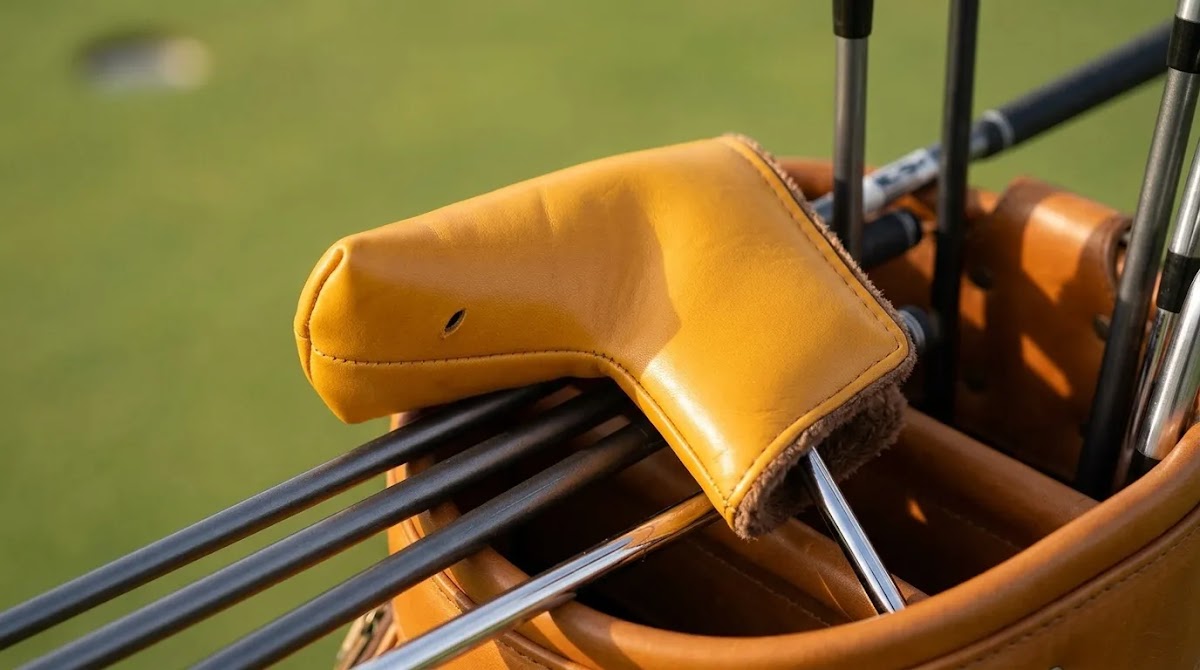
Strengths of using both cover types
-
Protects different club shapes with covers designed for their actual dimensions.
-
May reduce routine marks caused by club-to-club contact in a moving bag.
-
Keeps premium putter finishes, painted wood crowns, and alignment details better shielded during transport.
-
Makes it easier to identify clubs and keep the top of the bag visually organized.
-
Allows you to choose different materials, closures, and styling for high-use and low-use clubs.
Considerations before covering every club
-
Every cover adds a small handling step, particularly with a putter that comes out on every green.
-
A poorly fitted putter cover can be more frustrating than no cover at all.
-
Leather, knit, and fabric covers may retain moisture if they are put away wet, so drying and basic care matter.
-
Headcovers protect against ordinary contact, not every impact, weather condition, theft risk, or travel-related accident.
Choosing Your Cover Setup
Build your setup around the clubs you carry and the conditions they face, rather than copying another golfer’s bag.
1. Start with the putter shape
Confirm whether your putter is a blade, mid-mallet, or mallet. Look at the overall width, rear geometry, and shaft position. The cover should close without forcing the club into place, yet it should not shift freely when the bag is lifted.
2. Count the woods and hybrids you actually use
Most players need a cover for a driver, then one for each fairway wood or hybrid that stays in the bag. If you rotate clubs by course or season, label covers clearly so the correct one stays with the corresponding club.
3. Match the closure to your routine
A putter cover should be simple enough to remove and replace repeatedly without distracting from your pre-putt routine. Standard headcovers can be more forgiving because they are handled less often, but they should still stay secure in a cart or while walking.
4. Select material for your playing habits
Leather offers a structured, refined look and may develop character over time, but it needs sensible moisture care. Knit covers can give a traditional appearance and flexible fit, although they may stretch or snag more easily. Synthetic and neoprene options can suit golfers who prefer low-maintenance utility. Material should support your use pattern, not only your bag’s aesthetic.
5. Treat style as a finishing choice
Think of a bag where the putter cover steals the show while everything else plays a supporting role. Pair a bold, statement putter cover with wood covers in a shared color or material, letting the quieter pieces echo one small detail rather than compete for attention. In the end, the right setup is the one that fits your clubs precisely, stays dry and well-maintained, and feels like a pleasure to reach for every round.
Winner on this dimension: Putter cover. Your putter cover deserves the most careful selection because it is handled more frequently and fit mistakes are immediately noticeable. Once that is sorted, selecting the right wood and hybrid covers is straightforward.
Matching Covers to Wood and Hybrid Sizes
Driver, fairway wood, and hybrid covers should be selected by club category and actual head size. A driver cover is designed for the largest head in the bag, so it may sit too loosely on a compact fairway wood or hybrid. Excess space can allow the cover to shift, catch on neighboring clubs, or come off during transport.
Picture a bag loaded with a 3-wood, 5-wood, and a pair of hybrids, without clear markers, sorting through covers mid-round becomes a needless hassle. Club-number tags solve that problem beautifully, offering quick visual order even in a crowded bag. Still, craftsmanship matters here: fairway wood and hybrid covers tend to run smaller and sleeker than driver covers, yet their proportions shift depending on head shape and hosel construction. A number on a tag is a helpful guide, not a guarantee, it won't ensure a flawless fit across every manufacturer's take on that same club.
If you rotate fairway woods and hybrids based on course conditions, keep coverage matched to the clubs that enter the bag most often. Check that each cover reaches the crown, sole, and hosel area without stretching or hanging loose. A well-fitted set keeps your bag organized while giving each club a cleaner, more intentional level of protection.
Frequently Asked Questions

Is a putter cover the same as a headcover?
A putter cover is a type of headcover, but it is purpose-built for a putter. In everyday golf language, “headcover” often refers to the larger covers used for drivers, fairway woods, and hybrids. The difference is mainly fit and intended club shape. A standard wood cover is generally too large and awkward for a putter, while a putter cover cannot protect a driver properly.
Are putter covers necessary?
Putter covers are not required to play golf, but they are a sensible protection accessory for many golfers. A putter can contact irons, wedges, cart frames, bag hardware, and other equipment during movement. A fitted cover may reduce normal cosmetic wear on exposed surfaces. The value is usually greatest for golfers who carry their bag often, ride in carts, travel with clubs, or own a putter they want to preserve.
Do you need a putter cover and a driver headcover?
Yes, if you carry both clubs and want each protected appropriately. The putter cover shields the compact putter head, while the driver headcover protects the driver’s larger crown, sole, and hosel area. Neither cover performs the other’s job well. Using both is a practical choice for reducing routine bag contact, especially on uneven cart paths or while transporting clubs.
Can a blade putter cover fit a mallet?
Usually not well. A blade cover is designed for a narrower head, while mallets often have wider bodies, rear sections, or distinctive shapes that need more interior room. Trying to force a mallet into a blade cover can stress the closure and make removal inconvenient. Check your putter’s head style before ordering, particularly if it is center-shafted or has wings or a wide rear flange.
Do putter covers fit all putters?
No. Putter covers are made for different head profiles, including blades, mid-mallets, and mallets. The head’s heel-to-toe length, front-to-back depth, rear shape, and shaft placement all affect compatibility. A cover should close easily and remain secure without leaving parts of the head exposed.
What kind of putter cover do I need?
Let your putter's silhouette lead the decision, not the aesthetics stitched across the cover. A sleek blade demands a sleeker sheath, while a mallet's bulkier, rounded contours call for something with real depth and room to spare. Shaft placement matters too, center-shafted designs often need the opening set just right to slide on smoothly. Take a moment to measure before you buy; that extra care ensures your cover sits flush, looks every bit as polished as your game, and protects your investment the way it deserves.
How do I know whether my putter is a blade, mid-mallet, or mallet?
Blade putters are generally narrow, simple, and elongated from heel to toe. Mid-mallets have more body behind the face than a blade but remain more compact than a full mallet. Mallets are typically wider from front to back and may have large rear flanges, wings, cavities, or high-MOI shapes. The manufacturer’s product description can also confirm the category.
Can I use a driver headcover on a fairway wood or hybrid?
Picture tucking your fairway wood into a cover built for your driver, it might slide right off, leaving the clubhead exposed to the very scratches you're trying to prevent. That's because driver covers are crafted to accommodate a larger head, while fairway and hybrid designs are tailored to a trimmer profile. Choose the cover that matches your club's true dimensions, and you'll enjoy a snug, confident fit that stays put through every swing, every round, and every trip to and from the course.
Should I use covers on irons too?
Iron covers are optional and often less practical for regular play because they must be removed and replaced frequently. Many golfers reserve them for travel, long-term storage, or situations where clubs are packed tightly. Woods, hybrids, and putters generally receive more consistent cover use because their clubheads have shapes and finishes that can be more exposed to contact within a bag.
What is the best putter cover closure?
The best closure is the one that secures the cover without slowing down your routine. Magnetic closures are popular because they can be quick and quiet. Hook-and-loop closures can provide an adjustable hold but may collect debris over time. Slip-on designs can work if the fit is precise. Your putter’s shape, the cover construction, and how often you play are more useful decision factors than the closure type alone.
Key Takeaways
-
A putter cover is a specialized headcover designed around blade, mallet, or mid-mallet putter shapes.
-
Standard headcovers protect drivers, fairway woods, and hybrids, not putters.
-
Most golfers who carry woods and a putter benefit from using both types.
-
Putter cover fit matters most because the cover is handled repeatedly during every round.
-
Headcovers may reduce routine cosmetic wear, but they cannot prevent every type of damage.
In Brief
Your decision becomes simple once you separate the club types. The putter cover is for the club used on every green. Standard headcovers are for the larger wood and hybrid heads that move around at the top of the bag.
| Choice | Best For |
|---|---|
| Putter cover | Golfers who want shape-specific protection for a blade, mid-mallet, or mallet putter. |
| Standard headcovers | Golfers protecting drivers, fairway woods, and hybrids from routine bag contact. |
| Both types | Most golfers who carry a putter plus at least one wood or hybrid. |
Bottom Line
The verdict is the same as the quick answer: choose a putter cover for your putter and standard headcovers for your woods and hybrids. They are not competing accessories. They are complementary forms of protection for clubs with very different shapes, finishes, and day-to-day handling needs. Start with proper fit, particularly for a mallet or center-shafted putter, then select a material and style that suits how you play and travel. A thoughtfully covered bag can help your clubs look more composed from the first tee to the final green.
Picture your clubs riding snugly in the cart, shielded from the knocks and scrapes that come with every round, that's the quiet work a well-crafted headcover performs. Still, no cover guarantees total immunity from the elements, rough handling, or the wear that travel and storage bring over time. Before you invest, take a moment to confirm the fit, materials, care instructions, and terms behind the product you're choosing.


